
The Big Picture
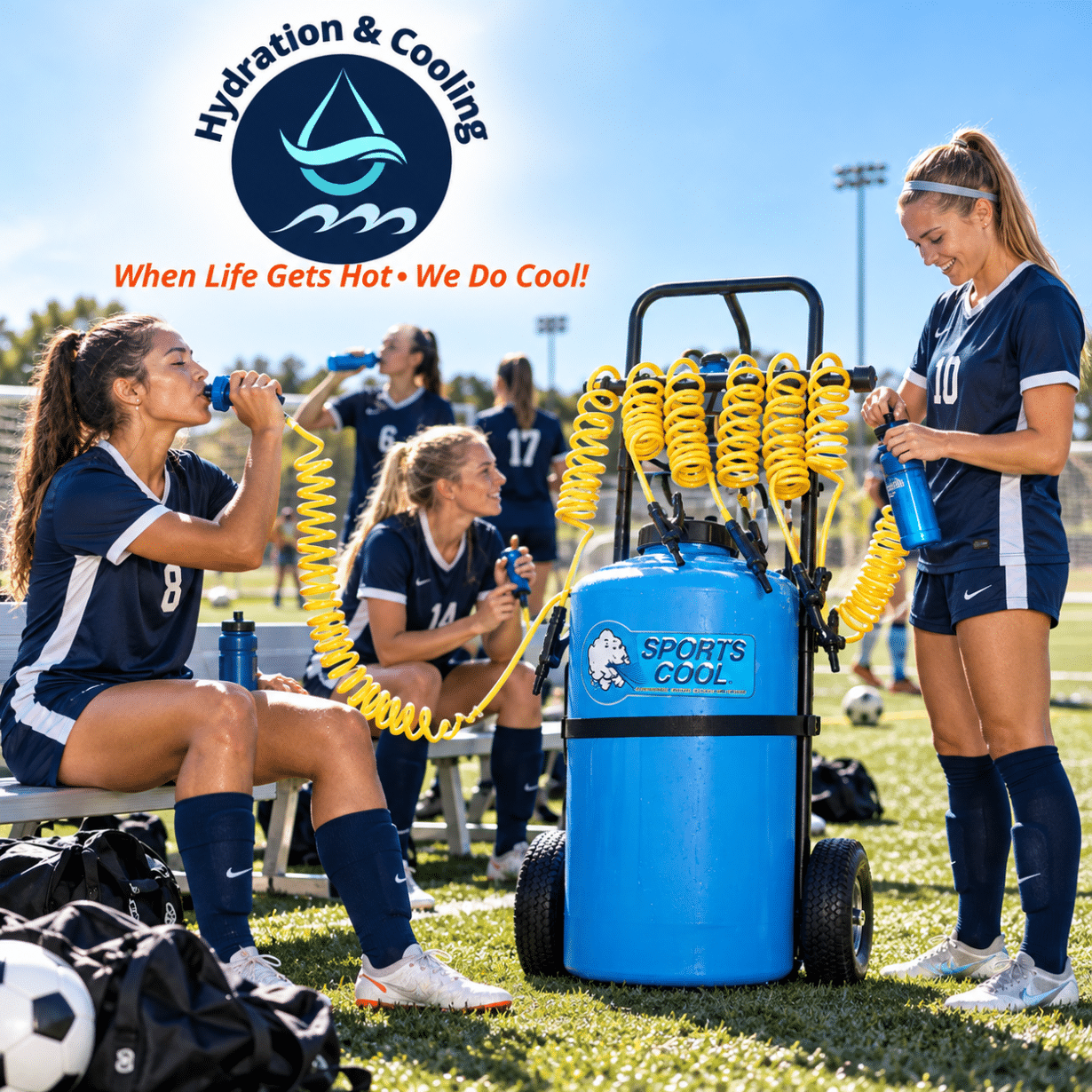
Women’s soccer hydration stations are an essential part of organizing reliable water access for practices, matches, preseason training, away games, and tournament weekends.
For high school girls’ varsity and junior varsity teams, NCAA women’s soccer programs, competitive clubs, academies, and professional organizations, the equipment must fit the way the team uses its facilities.
A water station that works for one team on a single practice field may not be practical for a soccer complex with several teams training simultaneously. Likewise, a large hydration tanker may be useful at a college training facility but difficult to transport to an away tournament.
Portable water carts, rolling coolers, rechargeable hydration stations, and larger water wagons give athletic departments several ways to organize drinking water access.
The objective is not simply to purchase a tank. It is to create a dependable, accessible, and manageable hydration station setup that staff can use throughout the women’s soccer season.
Key Insight
The most effective women’s soccer hydration station is the one that matches the team’s field layout, roster, dispensing needs, mobility requirements, and water replenishment plan.
For some programs, two smaller mobile stations placed near separate training areas may be more useful than one larger central system.
For others, a high-capacity water wagon with multiple drinking points may provide a more practical solution, especially when the nearest potable water source is far from the field.
Equipment selection should be based on how the program operates—not simply the number of gallons listed in a product description.
What Matters Most
When evaluating women’s soccer hydration stations, focus on six purchasing and planning priorities:
- Team access: How many players and staff will use each station?
- Water capacity: How much water must be available between refills?
- Dispensing points: How efficiently can athletes access water during scheduled breaks?
- Field placement: Where should stations be located for practices and matches?
- Mobility: Can staff transport the equipment across grass, turf, gates, and storage areas?
- Maintenance: Who is responsible for filling, cleaning, charging, inspecting, and storing the equipment?
These considerations apply whether a program uses a conventional cooler cart or a rechargeable water wagon.
Table of Contents
Why Women’s Soccer Programs Need Dedicated Hydration Stations
Women’s soccer programs often use the same athletic facilities for several different activities.
A team may begin with warm-ups near the sideline, move to a full-field tactical session, separate into smaller technical groups, and finish with conditioning or scrimmage work.
During matches, substitutes and staff need water access within the venue’s permitted team areas. At tournaments, players may move between fields while equipment staff manage supplies and transportation.
These situations create practical questions about where water is located, how much is available, and how the equipment moves.
Hydration stations support organized water access
A hydration station gives coaches, athletic trainers, and equipment managers a designated place to make drinking water available.
Depending on the system, it may include an insulated cooler, a rolling cart, a refillable tank, a rechargeable pump, or multiple drinking nozzles.
The equipment should support the program’s established hydration procedures, not dictate individual athletes’ fluid intake.
Why a permanent water fountain may not be enough
Permanent drinking fountains can be useful, but they may be located inside a building or far from active training areas.
Portable equipment allows staff to position water closer to the team’s scheduled break locations.
This flexibility becomes particularly valuable at facilities with multiple soccer fields or limited access to fixed water infrastructure.
Types of Women’s Soccer Hydration Equipment
There are several types of team water coolers and hydration stations available for athletic programs.
Each offers a different combination of capacity, portability, dispensing access, and maintenance requirements.
Rolling water cooler carts
A rolling cooler cart is a practical option for programs that already use conventional insulated water coolers.
Hydration & Cooling offers a rolling water cooler cart designed to accommodate standard 5- or 10-gallon coolers.
Its wheeled frame and supplies shelf make it suitable for moving drinking water and related supplies between storage areas, practice fields, and permitted sideline locations.
For smaller squads, supplemental stations, or travel situations, a cooler cart may provide a straightforward solution without requiring a powered dispensing system.
Recommended products
-

Rolling Water Cooler Cart & Optional 5 + 10 Gallon Igloo Cooler
Price range: $490.00 through $595.00
Rechargeable 10- and 20-gallon hydration carts
Rechargeable hydration carts combine onboard water storage with pump-assisted dispensing.
Hydration & Cooling’s 10- and 20-gallon hydration carts feature rechargeable pump systems, aluminum frames, flat-free tires, and tanks designed for filling and cleaning.
These carts are worth considering when a women’s soccer team needs mobile water access near training areas.
A smaller cart may serve an individual training group, while a larger cart can provide additional capacity for a central practice location.
Portable 35-gallon water wagons
A 35-gallon water wagon offers more onboard capacity than a compact hydration cart.
This may be useful for programs operating farther from convenient water sources or managing longer sessions between planned refills.
A rechargeable 35-gallon hydration station can also serve as a central water distribution point for a team, depending on its dispensing configuration.
The decision should account for the weight of a filled tank, field conditions, and how the equipment will be transported.

50-gallon and larger hydration systems
Larger water wagons can be appropriate for athletic departments managing several teams, extended practice periods, or shared field facilities.
However, larger capacity comes with additional considerations.
Staff must evaluate the equipment’s loaded weight, storage dimensions, movement across field surfaces, and access to suitable refill locations.
A larger system is not automatically better than several smaller stations positioned where athletes actually train.
Recommended products

Choosing the Right Hydration Station Capacity
One of the most common equipment-planning questions is how many gallons a women’s soccer team needs.
There is no single answer that applies to every roster or facility.
Start with the number of users
Consider the number of players, substitutes, coaches, athletic trainers, and other staff who will use the station.
Then determine whether it serves one team, multiple practice groups, or several teams sharing the same facility.
Evaluate practice duration and refill access
A station near a reliable potable water source can be replenished differently from equipment at a remote practice field.
Programs should assess the time between planned refills, actual water consumption, and the availability of backup supplies.
Consider dispensing capacity
Tank capacity and dispensing capacity are different.
A large tank stores more water, but the number and configuration of dispensing points influence how athletes access it.
For example, a station with multiple nozzles may be convenient during a short scheduled break when several players need water.
Avoid relying on roster size alone
Two women’s soccer teams with identical roster sizes may require different equipment because their schedules, facilities, and operating arrangements differ.
Coaches and equipment managers should coordinate with athletic training staff when estimating water needs rather than relying on a universal per-player formula.
Planning Hydration Stations for Multiple Soccer Fields
Multi-field facilities create some of the most important equipment decisions for women’s soccer programs.
A high school may use separate practice fields for varsity and JV teams. A college program may have dedicated training and competition fields. A club complex may host several girls’ teams at the same time.
One central station or multiple smaller stations?
A central water wagon can simplify equipment oversight when all users are close to the same location.
However, it may become inconvenient when players are spread across distant fields.
Multiple portable stations can provide more accessible water locations, although they also require additional filling, inspection, cleaning, and storage.
The better arrangement depends on the actual field layout and available staff.
Position stations near planned break areas
Water equipment should be located near places where coaches expect players to gather.
Avoid placing carts in active drill lanes, pedestrian routes, emergency access areas, or locations where they could interfere with play.
Account for equipment movement
Field surfaces, gates, slopes, and storage locations can affect how easily a cart moves.
Equipment managers should evaluate wheel design, tank weight, cart dimensions, and permitted travel routes before purchasing.
Coordinate shared equipment
When multiple teams use the same stations, a written equipment assignment schedule can help prevent conflicts.
Staff should know which team is responsible for each cart and when it must be returned, cleaned, refilled, or charged.
High School Girls’ Soccer Hydration Station Planning
High school girls’ soccer programs often manage varsity and junior varsity teams within a shared athletic department.
That makes flexibility and ease of operation particularly important.
Varsity and JV practice arrangements
Varsity and JV teams may practice at different times, use separate fields, or share a field in rotating sessions.
A single large hydration system may work when schedules do not overlap.
When both teams train simultaneously in separate areas, two smaller stations may provide more convenient access.
Equipment that staff can manage consistently
High school programs should consider who will fill, move, operate, and clean the equipment.
A station that requires complicated setup may be less practical when staffing is limited.
Rolling coolers and compact rechargeable carts can be useful options when mobility and straightforward operation are priorities.
Home-match setup
Before home matches, staff should identify the permitted team area, the location of water equipment, and any restrictions affecting carts or dispensing systems.
The station must remain clear of player movement, officials, and emergency access.
Budgeting for more than one team
An athletic department may find it useful to purchase equipment that can serve girls’ soccer alongside other school sports.
Shared use can be practical when schedules, cleaning responsibilities, and storage arrangements are clearly managed.
NCAA Women’s Soccer Hydration Equipment
College women’s soccer programs may operate across larger athletic facilities and more complex training schedules.
Equipment planning should reflect the institution’s actual field configuration and staff responsibilities.
Training fields and competition venues
Some college programs train at a facility separate from their home match venue.
This can require equipment to be transported between locations or separate hydration systems to be maintained at each site.
Supporting multiple training groups
College practices may divide players into technical, tactical, goalkeeper, and conditioning groups.
When these groups occupy different areas, portable hydration carts can help staff organize water access closer to designated breaks.
Coordinating athletic department resources
College equipment managers may oversee hydration systems used by several sports.
Standardized operating procedures for filling, charging, cleaning, and storage can help keep shared equipment ready.
Selecting equipment for institutional use
College programs should consider durability, manufacturer operating instructions, replacement components, storage requirements, and purchasing procedures.
The equipment must fit the institution’s facilities rather than an assumed model of how every NCAA program operates.
Women’s Club, Academy, and Professional Soccer
Women’s soccer extends well beyond school and college athletics.
Club, academy, and professional programs often face distinct equipment-management challenges.
Girls’ club and academy programs
Club complexes may have several age groups practicing simultaneously.
A hydration station assigned to one field may not be convenient for another, especially when teams rotate through different locations.
Programs can evaluate smaller mobile carts for individual teams and larger shared systems for centralized facilities.
Weekend tournaments
Club teams frequently attend events at facilities they do not control.
Portable equipment should be selected with vehicle capacity, loading arrangements, and venue rules in mind.
A rolling cooler may be easier to transport for some teams, while others may have the resources to move a larger water wagon.
Professional women’s soccer
Professional organizations may have dedicated training facilities, equipment personnel, and sports medicine staff.
Even with those resources, equipment decisions still depend on practical details: location, capacity, dispensing access, replenishment, mobility, and maintenance.
Professional-level equipment planning should be based on the club’s actual operational requirements rather than assumptions about its facilities.
Match-Day Sideline Hydration Station Placement
A women’s soccer match requires hydration equipment to fit within the venue’s permitted team areas.
The station must be accessible without obstructing match operations.
Position equipment before players arrive
Staff should confirm where water carts and other equipment may be placed.
The location should support substitutes and staff while respecting competition rules and venue restrictions.
Prepare for halftime
Halftime can create concentrated demand for water access.
Before kickoff, staff should check water levels and confirm whether replenishment may be necessary.
Keep the sideline organized
Carts, hoses, bottles, and supplies should not interfere with officials, player movement, or emergency access.
Equipment should be stable and positioned according to manufacturer instructions.
Plan for changing field conditions
Rain, uneven grass, wet turf, and congested sideline areas may affect where equipment can be safely placed.
A match-day plan should account for the actual conditions at the venue.
Tournament and Travel Equipment Planning
Women’s soccer tournament schedules may involve multiple matches, different fields, and long periods at a sports complex.
Equipment planning should cover the entire event, not just kickoff.
Confirm the venue’s water access
Before traveling, identify whether the facility provides suitable potable water sources and where refills are permitted.
Also check rules governing personal or team equipment.
Match the equipment to transportation
Measure the equipment and confirm that it fits the team’s vehicle or trailer.
Consider loading requirements, safe transport, and whether the cart can be moved across the tournament venue.
Plan for field changes
If a team moves between fields, staff should know who is responsible for relocating the station.
Smaller carts may be easier to reposition, while larger systems may require a more deliberate transport plan.
Prepare backup water access
A team relying on a rechargeable station should consider an alternative if the battery, pump, or another component is unavailable.
A conventional cooler or supplemental station may provide useful backup capacity.
Hydration Station Maintenance and Storage
A hydration station is only useful when it is ready to operate.
Regular maintenance should be part of the women’s soccer equipment plan.
Before practice or a match
Confirm that tanks, hoses, and dispensing components are clean.
Check water supply, battery charge where applicable, wheels, connections, and the general condition of the equipment.
After use
Follow manufacturer instructions for draining, cleaning, sanitizing, drying, and storing tanks and dispensing components.
Inspect hoses and nozzles for wear or damage.
Between team assignments
When several teams share equipment, document who is responsible for returning it in usable condition.
A consistent process helps prevent a team from arriving at practice to find an empty or uncharged station.
Seasonal storage
Store equipment in accordance with manufacturer guidance, including any requirements for draining, battery care, or protection from freezing temperatures.
Women’s Soccer Hydration Station Comparison
The following comparison can help coaches and athletic directors identify which equipment categories deserve closer consideration.
| Equipment type | Potential women’s soccer application | Main planning priority |
|---|---|---|
| Rolling 5- or 10-gallon cooler cart | JV teams, smaller practice groups, travel | Portability and refill access |
| 10-gallon rechargeable hydration cart | Individual training groups, supplemental stations | Compact movement and dispensing |
| 20-gallon rechargeable hydration cart | Varsity practices, central training areas | Capacity and multiple drinking points |
| 35-gallon water wagon | College or club practice facilities | Replenishment and mobility |
| 50-gallon water wagon | Larger programs or longer operating periods | Loaded weight and transport |
| Multiple smaller stations | Multi-field complexes and simultaneous team practices | Staff assignments and maintenance |
These examples describe possible applications, not fixed capacity requirements for a particular team.
Programs comparing multiple models can consult the sports hydration equipment guide for additional information about equipment categories and purchasing considerations.
Building a Women’s Soccer Equipment Plan
An effective equipment plan should be practical enough to use throughout the season.
Start by documenting the program’s roster, training locations, competition venues, and equipment responsibilities.
Then identify where water stations are needed during normal practices, home matches, and away events.
Compare equipment based on capacity, dispensing access, mobility, maintenance, and available staff.
Finally, establish a repeatable process for filling, moving, operating, cleaning, and storing the stations.
Women’s Soccer Hydration Station Planning Checklist
- Identify varsity, JV, college, club, or professional team requirements.
- Map the fields and designated water-access locations.
- Confirm potable water and refill availability.
- Compare tank capacity and dispensing configurations.
- Evaluate carts and wagons for grass, turf, gates, and storage areas.
- Plan equipment transport for away games and tournaments.
- Assign filling, inspection, cleaning, and charging responsibilities.
- Maintain a backup water-access option.
- Review the setup when schedules or facilities change.
The goal is a dependable equipment arrangement that works for the people responsible for using and maintaining it.
Frequently Asked Questions
1. What is the best hydration station for a women’s soccer team?
The best station depends on the number of users, practice layout, water capacity requirements, and available refill locations. Smaller rolling cooler carts may suit compact or travel-based setups, while rechargeable hydration carts and larger water wagons may be appropriate for programs needing more capacity or multiple dispensing points.
2. How many hydration stations should a girls’ soccer team have?
The number depends on field layout, team size, training groups, and access to water. One central station may be sufficient for some programs, while separate stations can be more practical when varsity and JV teams practice simultaneously on different fields.
3. Are portable water carts suitable for NCAA women’s soccer?
Yes. Portable water carts can support college women’s soccer practices and match-day operations when their capacity, dispensing configuration, mobility, and maintenance requirements fit the institution’s facilities and procedures.
4. What is the difference between a rolling cooler cart and a rechargeable hydration station?
A rolling cooler cart transports a conventional insulated water cooler. A rechargeable hydration station uses an onboard pump and dispensing system, often with multiple drinking nozzles. The appropriate choice depends on the program’s operating needs.
5. Can one water wagon serve multiple women’s soccer teams?
Yes, provided the teams’ schedules, field locations, water requirements, and equipment responsibilities make shared use practical. Programs should establish procedures for refilling, cleaning, charging, and transferring the equipment between teams.
6. What hydration equipment should a women’s soccer team take to tournaments?
The equipment should fit the team’s transportation arrangements and the tournament venue’s rules. Rolling cooler carts and compact hydration stations may be convenient for travel, while larger systems may be appropriate when the team has suitable transport and refill arrangements.
7. How should women’s soccer hydration stations be maintained?
Follow manufacturer instructions for cleaning, sanitizing, draining, charging, inspection, and storage. Check the equipment before each use and assign clear responsibility when multiple teams share a station.
Conclusion: Build a Dependable Women’s Soccer Hydration Station Setup
Women’s soccer hydration stations should be selected around the actual needs of the program—not simply the size of a water tank.
High school girls’ teams, NCAA programs, clubs, academies, and professional organizations all benefit from evaluating equipment capacity, mobility, field placement, replenishment, and maintenance before purchasing.
Whether the solution is a rolling cooler cart, a rechargeable hydration station, or a larger mobile water wagon, the equipment should support reliable water access throughout practices, matches, and tournament schedules.
Hydration & Cooling offers portable hydration and cooling equipment for athletic programs, backed by more than 25 years of industry experience.
Call 828-820-8600, Monday–Friday, 10 AM–5 PM Eastern, to discuss hydration station options for your women’s soccer program.
When Life Gets Hot • We Do Cool!