
The Big Picture
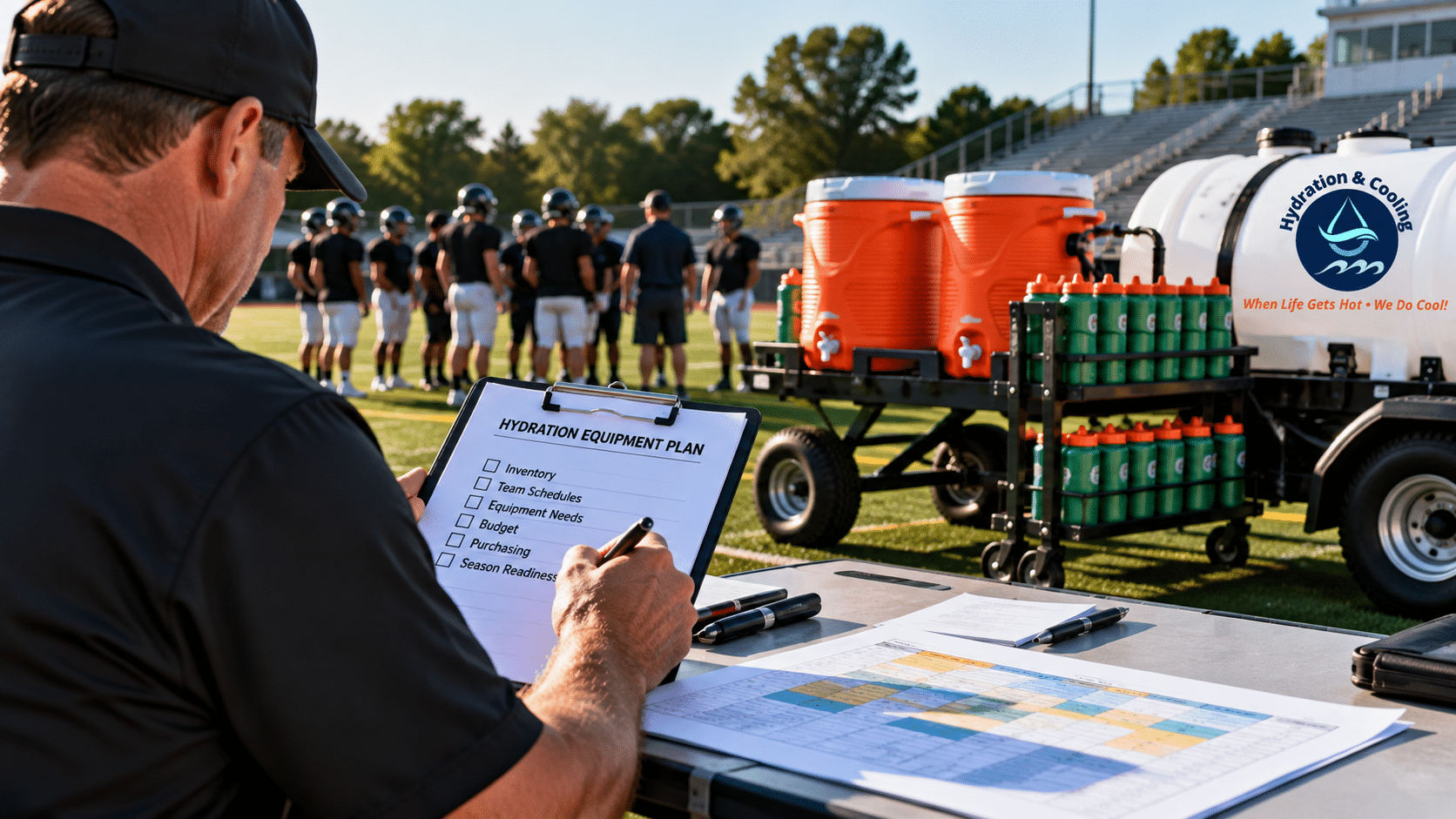
A high school football hydration equipment plan starts long before the first summer practice. Athletic directors and equipment managers must account for equipment already owned, the number of teams using it, purchasing deadlines, storage conditions, and the staff responsible for getting everything ready.
The challenge is not simply choosing a larger water cart. It is determining whether the school has the right equipment available at the right time—and whether its budget supports repairs, replacements, and future needs.
This guide explains how to build a school-specific purchasing and readiness plan for varsity, junior varsity, and freshman football programs. It focuses on equipment administration, purchasing decisions, and seasonal coordination rather than athlete hydration protocols or general product comparisons.
Quick Answer: How Should a High School Plan Football Hydration Equipment?
Start with a documented inventory, compare available equipment against the football calendar, identify gaps, prioritize repairs and purchases, prepare a school purchasing proposal, and assign responsibility for preseason readiness. Review shared equipment commitments with other athletic programs before approving new purchases.
What Matters Most
- Inventory existing equipment before requesting additional funding.
- Plan separately for varsity, JV, freshman, summer practices, and home games.
- Check whether shared equipment is actually available when football needs it.
- Prioritize unusable or unavailable essential equipment before optional upgrades.
- Include replacement parts, storage, transportation, and maintenance in the budget.
- Give every piece of equipment an assigned owner and readiness status.
Table of Contents
Why High School Football Needs an Equipment Planning Process
High school football programs often operate within a larger athletic department. Water coolers, rolling carts, mobile hydration systems, and related equipment may be shared with soccer, track and field, marching band, or other school activities.
That arrangement can be cost-effective, but it introduces a scheduling problem. Equipment listed in the athletic department inventory is not necessarily available to the football program on a particular afternoon.
A reliable plan answers four administrative questions:
- What equipment does the school own?
- What equipment will football need during each part of its season?
- Which existing resources can meet those needs?
- What must be repaired, replaced, purchased, or reserved?
The objective is to create an equipment program that staff can manage and school administrators can approve.
For broader explanations of equipment categories and capabilities, consult our football hydration equipment guide. This article concentrates on the decisions a school must make after understanding those options.
Step 1: Build an Accurate Equipment Inventory
An equipment inventory should be more useful than a list of items in a storage room. It should show what each item does, whether it works, where it is stored, and who is responsible for it.
Record the Equipment the School Already Owns
Include portable water carts, rolling cooler stands, water wagons, dispensing accessories, refill equipment, and other hydration-related assets used by the football program.
For each item, record:
- Equipment type, manufacturer, and model
- Asset or identification number
- Storage location
- Current condition
- Available accessories and replacement parts
- Assigned department or team
- Date of last inspection
- Repair or replacement needs
Use a consistent condition rating such as ready, needs attention, or unavailable.
This simple classification helps distinguish an equipment shortage from a repair problem.
Separate Ownership From Availability
A water wagon owned by the athletic department might be assigned to a soccer tournament on the same day football has an event. An equipment inventory that ignores scheduling will overstate what is available.
Identify which assets belong exclusively to football, which are shared, and which require advance reservations.
Schools using football water wagons across multiple teams should record their assignments separately from the general inventory.
Step 2: Match Equipment to the Football Calendar
High school football is rarely a single-team operation. A school may have separate varsity, JV, and freshman schedules, along with summer activities, scrimmages, and games.
The equipment plan should follow those commitments.
Account for Different Team Schedules
Review the football calendar for overlapping activities. Note when multiple groups practice simultaneously, when teams use separate fields, and when equipment must be transported between facilities.
The planning question is not just how many players belong to the program. It is how many equipment commitments occur at the same time.
Include Summer and Preseason Operations
Summer activities can begin before normal school-year staffing and purchasing routines are fully active.
Confirm equipment access, storage arrangements, authorized operators, and refill resources before the first scheduled session.
Medical and environmental decisions should remain with the school’s athletic trainer and applicable governing procedures. This equipment plan supports those operations; it does not replace them.
Coordinate With Other Sports
Ask other program leaders to identify dates when shared equipment is already committed.
A shared-use calendar should show the equipment, requesting team, pickup location, return date, and person responsible.
This avoids discovering a conflict when two teams expect to use the same cart.
Step 3: Identify Equipment and Coverage Gaps
After completing the inventory and schedule, compare available resources against actual commitments.
This is where a school can identify what it needs without assuming every program requires the same equipment package.
Distinguish Different Types of Gaps
A capacity gap occurs when available equipment cannot support the school’s planned operations.
An availability gap occurs when suitable equipment exists but is already assigned elsewhere.
A mobility gap occurs when equipment cannot reasonably be transported to the intended location.
A reliability gap occurs when equipment needs repairs, replacement components, or testing before it can be placed in service.
A staffing gap occurs when equipment is available but no authorized person has been assigned to prepare, move, or manage it.
These problems do not all require purchasing a new hydration system.
Document the Consequence of Each Gap
For every issue, describe the affected activity, the existing equipment limitation, and the proposed solution.
For example, if a rolling cooler cart is repeatedly unavailable because two programs share it, the solution might be a better reservation schedule—or an additional cart if the conflict cannot be resolved.
If a mobile system is otherwise suitable but has a damaged component, repair may be more appropriate than replacement.
Step 4: Establish Purchasing Priorities
High school athletic budgets are rarely unlimited. A documented priority system helps administrators compare competing requests.
Priority One: Restore Essential Equipment Availability
Start with equipment that is unusable, unreliable, or unavailable for scheduled operations.
This category may include necessary repairs, replacement parts, or equipment needed to resolve a documented scheduling conflict.
Priority Two: Improve Operational Efficiency
Next, consider upgrades that reduce repeated transport, simplify staff assignments, or make existing equipment more useful across multiple school activities.
An additional rolling cart, for example, may be a practical improvement when staff currently move equipment between distant facilities throughout the day.
Priority Three: Plan Future Enhancements
Optional upgrades and expansion projects belong in a longer-term equipment plan unless a current operational need justifies them.
This prevents the purchasing process from becoming a collection of unrelated product requests.
Use a Written Decision Record
Each proposed purchase should include the problem being addressed, alternatives considered, expected users, estimated cost, and reason for its priority.
That record makes the recommendation easier to review during budget discussions.
Step 5: Build a School Equipment Budget
A useful equipment budget includes more than the initial purchase price.
Account for the Full Cost of Ownership
Depending on the equipment, budget considerations may include:
- Equipment purchase price
- Shipping and delivery
- Accessories and replacement components
- Battery or power requirements, where applicable
- Routine cleaning and maintenance supplies
- Secure storage arrangements
- Transportation between facilities
- Expected service life and replacement planning
Do not assume the lowest-priced product will have the lowest operating cost.
Compare Repair, Replacement, and Expansion
A repair estimate should be evaluated against the age, condition, and future usefulness of the existing equipment.
Replacement may make sense when repairs are recurring or parts are no longer practical to obtain. Expansion may be appropriate when the school has documented simultaneous needs that its current inventory cannot cover.
These are different budget decisions and should be presented separately.
Create a Multi-Year Purchasing Plan
When the school cannot fund every request immediately, organize purchases by school year.
A simple three-year plan might address immediate equipment gaps first, scheduled replacements second, and optional program improvements third.
Review the plan annually rather than treating the original schedule as permanent.
Step 6: Coordinate Purchasing and Funding
Once the equipment priorities are clear, the next step is preparing a proposal that fits the school’s purchasing process.
Prepare a Purchasing Request Administrators Can Evaluate
A strong request identifies the requesting department, equipment purpose, quantity, required specifications, estimated total cost, funding source, and proposed delivery date.
Where applicable, include supplier quotations, warranty information, service considerations, and compatibility with equipment already owned.
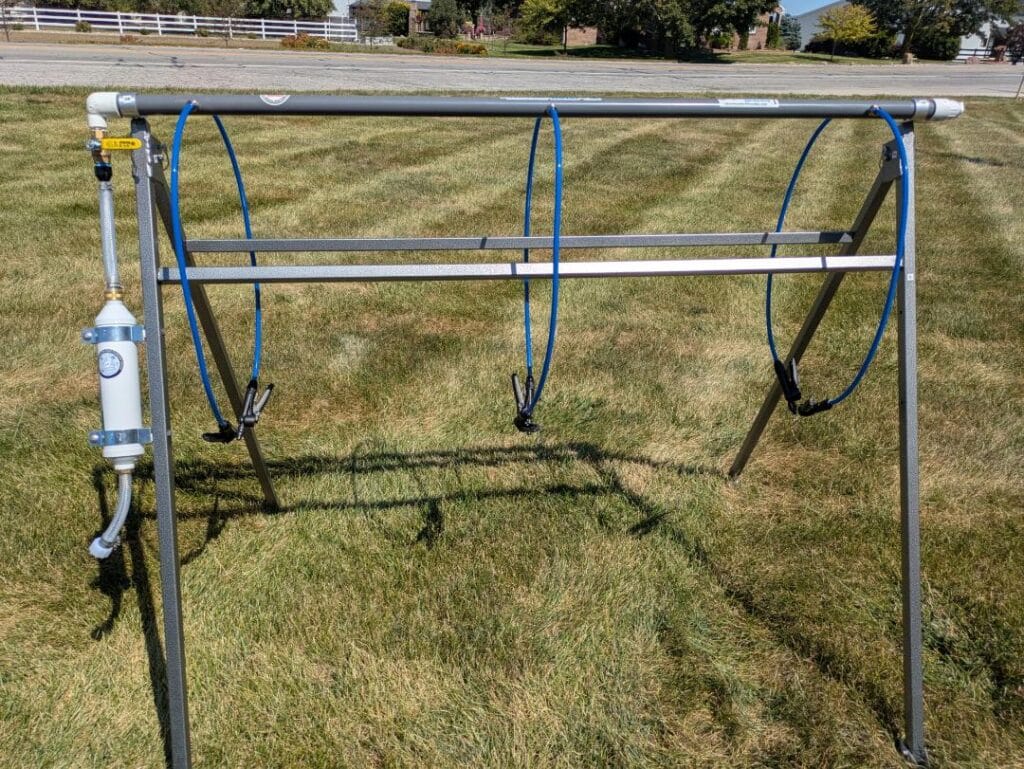
Schools evaluating water coolers and portable carts can review available water coolers and stands as one starting point for comparing equipment options.
Our Water Coolers and Stands
-

Constant Chill Sports Cool Cart | Hydrates 6 Athletes
$1,290.00 -

Efficient 20 Player Team Practice Hydration Package | Our Hydration Station Combo
$3,390.00 -

Excellent Team Hydration Station Tree | Serves 8
$590.00 -
Our Best Football Water Station Serves 6 In Pads
Original price was: $1,190.00.$1,090.00Current price is: $1,090.00. -

Rolling Water Cooler Cart & Optional 5 + 10 Gallon Igloo Cooler
Price range: $490.00 through $595.00 -
Small Hydration Carts | USA-Made 10 & 20 Gallon Models | New Low Price!
Price range: $1,890.00 through $2,180.00 -

Sports Cool Rolling Powered Team Drinker | Best Water Station Serves 6
$1,990.00

Follow District Purchasing Procedures
School districts may have specific rules for quotations, purchase orders, tax-exempt transactions, competitive bidding, and approved vendors.
Confirm the applicable requirements with the district purchasing office. Do not assume that procedures are identical across states or school systems.
Coordinate Booster Clubs and Other Funding Sources
Booster organizations, approved sponsors, and athletic department funds may help support equipment purchases.
Before seeking outside support, establish who will own the equipment, who may use it, and who will cover future maintenance.
A donation that creates an ongoing maintenance expense should still be included in the school’s equipment plan.
Step 7: Prepare Equipment for the Season
Purchasing equipment is only one part of readiness. Existing and newly acquired assets must be accounted for before football activities begin.
Assign Responsibility for Every Asset
Identify who will inspect each item, arrange approved maintenance, coordinate transport, and confirm that equipment is ready for scheduled use.
Avoid relying on informal assumptions that someone else has handled the preparation.
Use a Preseason Readiness Check
Before the season, confirm that:
- Equipment is present and accounted for.
- Required accessories are available.
- Known repairs have been completed.
- Applicable manufacturer instructions are accessible.
- Storage and transportation arrangements are confirmed.
- Shared-use reservations have been reviewed.
- Responsible staff members know their assignments.
Detailed cleaning procedures and technical maintenance belong in equipment-specific instructions and dedicated maintenance resources. The purpose of this checklist is administrative accountability.
Create a Handoff Between Seasons
At the end of the season, update equipment condition records, identify outstanding repairs, and document purchases needed for the following year.
This gives the next equipment manager or athletic director a usable starting point rather than forcing them to rebuild the inventory.
Step 8: Use a High School Equipment Planning Worksheet
A practical worksheet brings the entire process together. Use one row for each piece of equipment or identified need.
Equipment Inventory Fields
| Field | What to Record |
|---|---|
| Equipment ID | School asset number or identifier |
| Equipment type | Cart, cooler, wagon, or accessory |
| Assigned users | Varsity, JV, freshman, or shared |
| Current condition | Ready, needs attention, unavailable |
| Schedule conflicts | Dates when another program needs it |
| Required action | Keep, repair, replace, or purchase |
| Estimated cost | Quote or planning estimate |
| Priority | Immediate, upcoming, or future |
| Responsible person | Staff member assigned to follow up |
| Target completion | Date needed before scheduled use |
Turn the Worksheet Into a Purchasing Plan
After completing the worksheet, group the requested actions into repairs, replacements, and additional equipment.
Then prepare a short summary for the athletic director or purchasing office:
- The school’s current equipment situation
- The operational problems identified
- The recommended actions
- The estimated funding requirement
- The proposed completion schedule
This creates a documented reason for each purchase and reduces the likelihood of ordering equipment simply because it appears useful.
Frequently Asked Questions
1. How should a high school begin planning football hydration equipment purchases?
Begin with an inventory of existing equipment and a review of varsity, JV, freshman, and summer schedules. Identify unavailable or unreliable assets before requesting new purchases. Use those findings to create a prioritized purchasing plan.
2. Should high school football teams have their own hydration equipment?
Not necessarily. Shared athletic department equipment may be practical when scheduling, transportation, and maintenance responsibilities are clearly managed. Dedicated equipment becomes worth evaluating when documented schedule conflicts or operational limitations cannot be resolved.
3. What should be included in a high school football hydration equipment inventory?
Record the equipment type, manufacturer, model, asset number, storage location, condition, accessories, assigned users, inspection status, and outstanding repairs. Include shared-use commitments so the inventory reflects actual availability.
4. How can a school prioritize hydration equipment purchases on a limited budget?
Address unusable or unavailable essential equipment first. Next, evaluate improvements that solve recurring operational problems. Schedule optional upgrades for future budget cycles. Document the reason and estimated cost for each request.
5. Can booster clubs help purchase football hydration equipment?
They may be able to, subject to school and district policies. Before accepting funding or equipment, confirm purchasing approval, ownership, permitted use, maintenance responsibilities, and any applicable donation requirements.
6. What costs should a school consider beyond the equipment purchase price?
Consider delivery, accessories, replacement parts, maintenance supplies, storage, transportation, and any applicable power or battery requirements. These costs help administrators compare the longer-term implications of purchasing different equipment.
7. When should a high school review its football hydration equipment plan?
Review the plan before summer and preseason activities, whenever significant scheduling or equipment changes occur, and again after the season. The postseason review should identify repairs, replacements, and future purchasing needs.
Conclusion: Turn Equipment Needs Into a Practical Plan
High school football hydration equipment planning works best when purchasing decisions begin with documented needs rather than product assumptions.
An accurate inventory shows what the school owns. A shared-use calendar reveals when that equipment is available. A gap analysis identifies what needs attention. A purchasing plan turns those findings into decisions administrators can review and fund.
Together, these steps give athletic directors and equipment managers a repeatable process for supporting football operations while making responsible use of school resources.
Need Help Choosing the Right Hydration System?
Hydration & Cooling brings more than 25 years of experience helping schools, athletic departments, and sports organizations evaluate hydration and cooling equipment.
Whether your high school is replacing aging equipment, coordinating multiple football teams, or preparing a purchasing request, we can help you explore practical options that fit your program’s needs.
Call 828-820-8600, Monday–Friday, 10 AM–5 PM EST, to discuss your equipment requirements.