KEY TAKEAWAYS
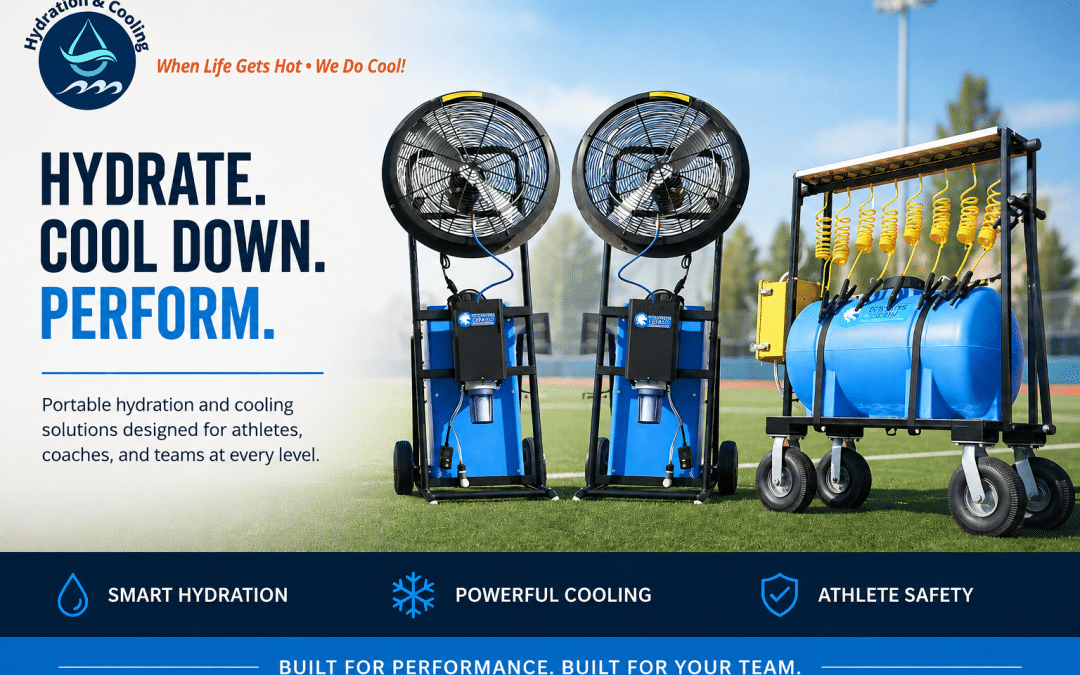
Football programs require more than water coolers to keep athletes safe during practices, camps, and games. Modern football hydration equipment includes portable hydration systems, water wagons, hydration stations, misting fans, and sideline cooling solutions designed to help athletes stay hydrated and reduce the risk of heat-related illness. Choosing the right equipment depends on team size, practice duration, climate, and facility needs.
Football demands extraordinary physical effort, especially during summer conditioning, preseason camps, and early-season games when temperatures and humidity levels can be at their highest. Coaches, athletic directors, athletic trainers, and equipment managers understand that hydration is no longer simply a recommendation—it is an essential part of athlete safety and performance.
Today’s football programs rely on specialized football hydration equipment designed to deliver water efficiently, minimize downtime, and support heat safety initiatives. From portable hydration systems and water wagons to cooling stations and misting fans, the right equipment helps programs create safer environments for athletes while improving practice efficiency.
This guide explores the most important football hydration equipment available and how athletic programs can choose solutions that meet the needs of their athletes and staff.
Why Football Hydration Matters
Football players can lose significant amounts of fluids during practices, conditioning sessions, and games. Hot temperatures, protective equipment, and intense physical exertion increase the body’s demand for hydration.
When athletes do not replace fluids effectively, dehydration can affect:
- Endurance
- Strength
- Reaction time
- Decision-making
- Recovery
- Overall performance
More importantly, inadequate hydration can contribute to heat-related illnesses that may require immediate medical attention.
Modern football programs increasingly view hydration as a critical component of athlete safety, alongside strength training, conditioning, recovery, and injury prevention.
The Risks of Dehydration During Football Activities
Football places unique demands on athletes because of the equipment they wear and the intensity of the sport.
Common concerns associated with dehydration include:
Reduced Athletic Performance
Even mild dehydration can affect an athlete’s ability to perform at their highest level.
Heat Exhaustion
Athletes may experience:
- Fatigue
- Dizziness
- Nausea
- Weakness
- Excessive sweating
Heat Stroke
Heat stroke is a serious medical emergency that requires immediate intervention and may become life-threatening if not addressed quickly.
For this reason, many athletic programs implement hydration schedules and invest in equipment that allows athletes easy access to water throughout practices and competitions.
Essential Football Hydration Equipment
Several categories of equipment help football programs support athlete hydration.
The best solution often combines multiple systems working together.
Portable Hydration Systems
Portable hydration systems are among the most popular solutions for football programs.
These systems are designed to:
- Transport large quantities of water
- Serve multiple athletes efficiently
- Reduce waste
- Simplify refilling
- Improve sanitation
Portable systems are particularly valuable during:
- Practice sessions
- Summer camps
- Away games
- Multi-field complexes
- Tournament events
Because they can be moved easily, they provide flexibility for programs of all sizes.
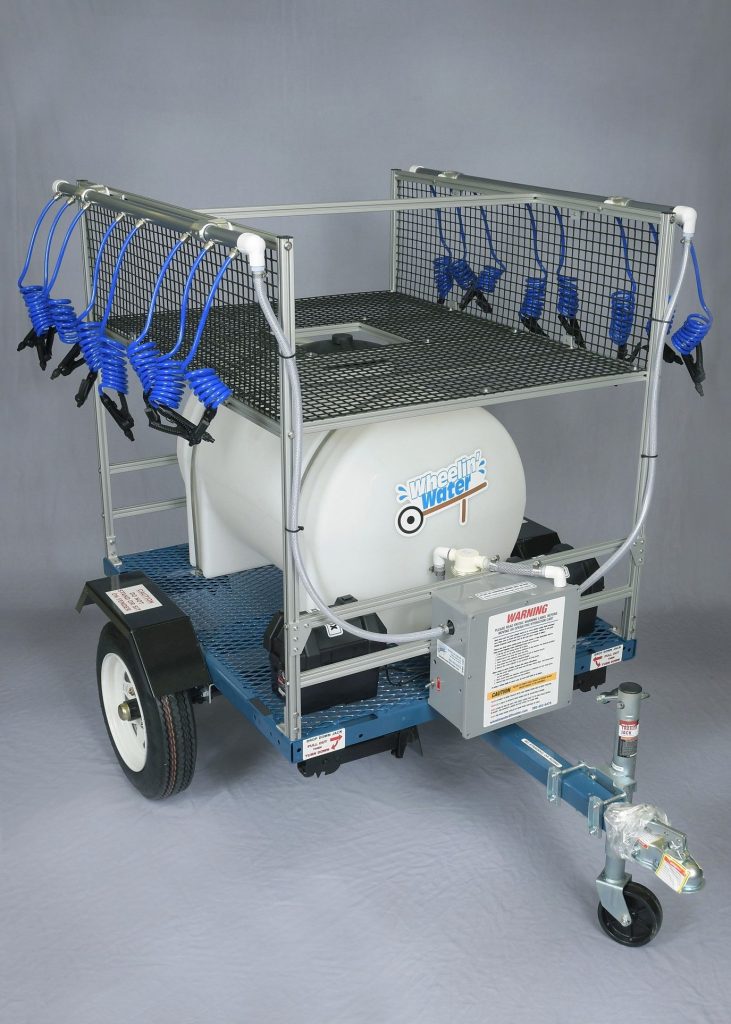
Water Wagons for Football Programs
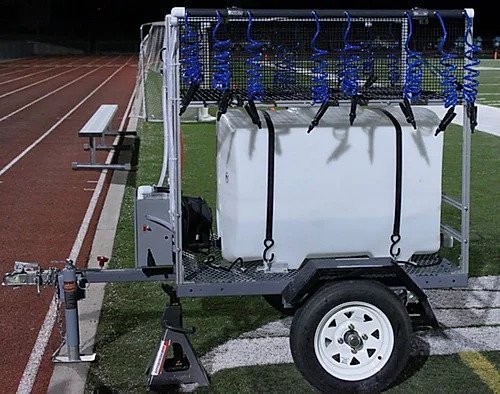
Water wagons remain one of the most effective hydration solutions for large football teams.
Football practices often involve dozens or even hundreds of athletes spread across large practice fields.
Water wagons provide several advantages:
High Capacity
Large water storage capacity reduces refill frequency.
Mobility
Equipment can move wherever athletes are practicing.
Multiple Drinking Stations
Several athletes can hydrate simultaneously.
Efficiency
Coaches can maintain practice flow while ensuring athletes have regular access to water.
For many high school, college, and professional football programs, water wagons become the centerpiece of a comprehensive hydration strategy.
Football Hydration Stations
Hydration stations offer another efficient solution for football programs.
These stations are designed to create organized access points where athletes can quickly hydrate and return to activity.
Benefits include:
- Reduced waiting times
- Improved practice efficiency
- Better athlete access
- Organized sideline management
- Support for larger rosters
Hydration stations are especially effective for:
- Varsity programs
- College teams
- Training camps
- Multi-team facilities
Sideline Cooling Equipment
Hydration alone is only one part of heat safety.
Many football programs also incorporate cooling equipment to help athletes manage heat exposure.
Examples include:
Misting Fans
Misting fans provide evaporative cooling that can help athletes feel more comfortable during breaks.
Cooling Stations
Dedicated cooling areas provide shaded recovery spaces between drills and periods.
Portable Cooling Solutions
Mobile cooling systems allow programs to create relief areas wherever activities are taking place.
These solutions are best used to complement hydration efforts and help create safer environments during periods of elevated temperatures.
Choosing the Right Football Hydration Equipment
Every football program has unique needs.
Several factors should influence equipment selection.
Team Size
A youth football organization may require different equipment than a university athletic department.
Questions to consider:
- How many athletes need access?
- How many fields are used simultaneously?
- How often are practices conducted?
Climate
Programs operating in hot or humid regions may require larger hydration capacities and additional cooling solutions.
Practice Duration
Longer practices increase hydration demands.
Programs that conduct multiple daily sessions often benefit from higher-capacity systems.
Transportation Requirements
Consider:
- Storage space
- Trailer requirements
- Facility access
- Travel schedules
Portable systems often provide greater flexibility for programs operating at multiple locations.
Hydration Planning for Football Teams
Equipment is most effective when combined with a structured hydration strategy.
Many successful programs develop plans that include:
Scheduled Hydration Breaks
Athletes are encouraged to hydrate at regular intervals.
Accessible Water Sources
Equipment should be positioned where athletes can quickly access water.
Staff Training
Coaches and staff should recognize signs of dehydration and heat-related illness.
Equipment Maintenance
Regular cleaning and inspection help maintain performance and sanitation.
When planning and equipment work together, football programs create safer and more efficient environments for athletes.
Why Football Programs Invest in Dedicated Hydration Equipment
Modern athletic programs increasingly recognize that hydration equipment serves multiple purposes.
Benefits include:
- Athlete safety
- Practice efficiency
- Improved organization
- Better hydration access
- Reduced downtime
- Enhanced program professionalism
- Support for heat safety initiatives
As football programs continue prioritizing athlete wellness and performance, specialized hydration equipment has become a valuable investment rather than an optional convenience.
Best Hydration & Cooling Equipment for Football Programs
-

24″ Misting Fans For Team | Powerful Outdoor Misting Cooling System
$2,590.00 -
50 Gallon Rechargeable Portable Water Wagon | 10 & 16 Hose Models – USA MADE!
$3,800.00 -
Best 65 Gallon Rechargeable Football Water Cow | Made In USA | New Low Price!
$5,090.00 -
Best Team Sports Hydration Station – Rechargeable 35 Gallon Tanker For 8 Players
Original price was: $2,790.00.$2,590.00Current price is: $2,590.00. -

Efficient 20 Player Team Practice Hydration Package | Our Hydration Station Combo
$3,390.00 -
Our #1 Game Day Package | Team Misting Fans Cooling Station + Hydration Tanker
Original price was: $5,750.00.$5,390.00Current price is: $5,390.00. -
Portable 35 Gallon Rechargeable Water Wagon | Made In USA!
$3,190.00 -
Super 100 Gallon Rechargeable Football Hydration Station | Made In USA & New Low Price!
$5,790.00 -
Water Mist Fans | Big Misting Fan For Football or Festivals
Original price was: $2,990.00.$2,790.00Current price is: $2,790.00.




Conclusion
Football programs face unique hydration challenges due to the sport’s physical demands, environmental conditions, and large roster sizes. The right football hydration equipment helps athletic departments, coaches, and trainers support athlete safety while maintaining efficient practices and game-day operations.
Whether a program chooses portable hydration systems, water wagons, hydration stations, sideline cooling equipment, or a combination of solutions, investing in effective hydration infrastructure helps create safer conditions for athletes at every level of competition.
Need Help Choosing the Right Hydration System?
Whether you’re outfitting a high school football program, a college athletic department, a professional sports team, a factory floor, a construction site, a tournament complex, or a parks and recreation facility, choosing the right hydration equipment can feel overwhelming. Capacity requirements, portability, athlete safety, budget considerations, and field logistics all play an important role in selecting the best solution.
With more than 25 years of experience helping coaches, athletic directors, equipment managers, safety coordinators, and purchasing departments, the team at Hydration & Cooling understands the unique hydration and cooling challenges organizations face every day.
If you’re unsure which water wagon, portable hydration system, hydration station, misting fan, or cooling solution best fits your needs and budget, we’re happy to help.
Call us at 828-820-8600 Monday–Friday, 10:00 AM–5:00 PM EST
Our experienced team can answer your questions, discuss your goals, and recommend hydration and cooling equipment solutions that support athlete safety, improve efficiency, and fit your budget.
Ready to get started? Contact us today and let us help you find the right hydration solution for your team or organization.
Read more:
Maintaining Your Team Water Tanker: Sanitization and Longevity Tips