
The Big Picture
Men’s and women’s lacrosse teams need dependable drinking-water access during practices, home games, travel, and tournaments. Coaches and equipment managers must decide how much water to bring, where athletes can reach it, and who will refill and maintain the stations.
This buyer-focused guide helps schools, colleges, and club programs select portable lacrosse hydration and cooling equipment for their facilities, schedules, and budgets.
Key Insight: What Hydration Equipment Does a Lacrosse Team Need?
A lacrosse team generally needs accessible drinking water, a reliable dispensing method, and a workable refill plan. Depending on roster size and field layout, equipment may include a rolling water cooler, a mobile hydration cart, a larger water wagon, or multiple stations serving separate practice areas. Outdoor misting fans may supplement the setup during appropriate warm-weather events. Choose by water access, dispensing points, mobility, and staff availability—not by a fixed gallon-per-player formula.
What Matters Most
Start with the team’s busiest practice or tournament day. Compare total water supply with simultaneous player access, check the route between storage and the field, and identify the person responsible for refills. Men’s and women’s programs can often share the same equipment. Plan purchases 60–90 days before the relevant practice season, and use your athletic trainer’s separate heat-safety procedures.
Table of Contents
Choosing Lacrosse Hydration Equipment
Rolling Water Coolers for Smaller Setups
A single-field practice with a nearby water connection may need a modest, easily transported station rather than a large tanker. Browse water coolers and carts when the priority is an accessible water point that staff can move between a storage room, bench area, and field. Compare cooler size, dispensing options, and refill frequency.
A rolling water cooler cart can also serve as a secondary station when a larger system supplies the main team area. Check the transport route and expected users.
Mobile Hydration Carts for Separate Practice Groups
When attackers, defenders, and goalkeepers work in different parts of a facility, one distant water point can create unnecessary traffic. The available 10- and 20-gallon hydration carts are worth comparing as mobile access points. Review the model’s dispensing features, power needs, and refill process.
Water Wagons for Larger or Shared Programs
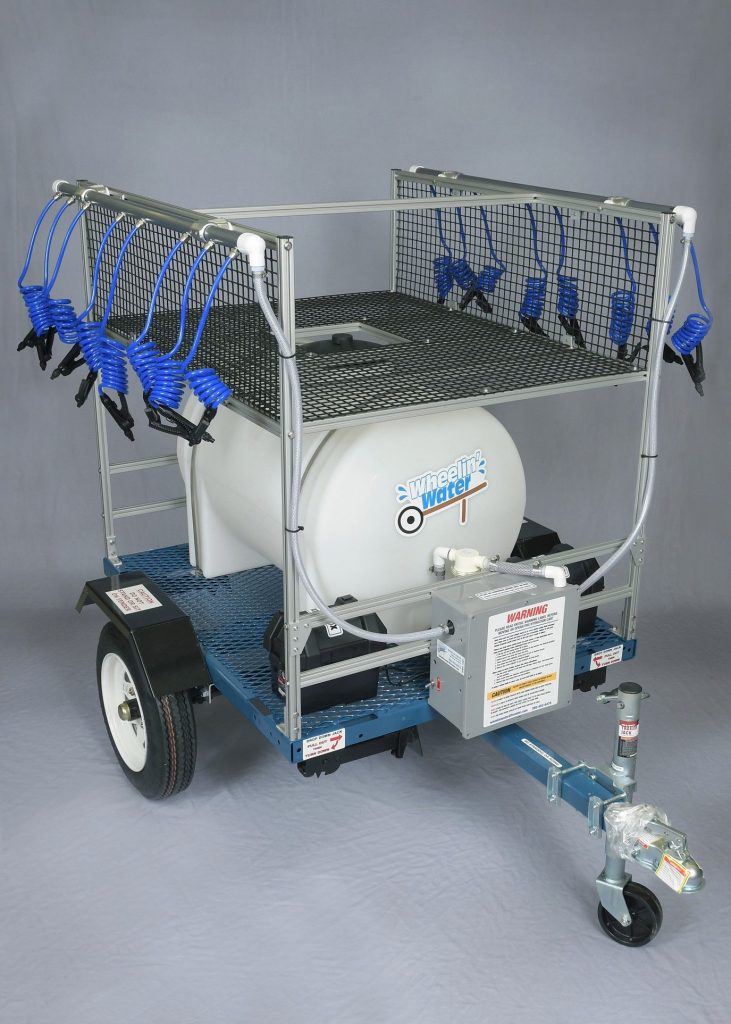
Programs with substantial rosters, limited refill access, or several teams sharing a facility may benefit from sports hydration tankers and water cows. Larger capacity can reduce refill trips, but it does not automatically solve congestion at the dispensing points. Compare tank size, number of usable outlets, loaded weight, wheel design, and the space required for safe positioning. A model suitable for football may also be useful for lacrosse when the operational needs match.
Water Capacity Versus Player Access
These are related but different equipment decisions. Capacity determines how much water the station can carry between refills. Access determines how conveniently players can obtain water during the opportunities provided by coaches.
Begin by listing the active roster, substitutes, coaches, and other users. Then consider session length, weather, the location of potable-water connections, and the number of groups working at once. Avoid making one gallon estimate serve every team: a home practice next to a tap differs significantly from a remote tournament field.
Next, walk through a typical break. If the full group reaches the same station together, would a second dispensing location make the area easier to manage? If two groups remain far apart, would a smaller cart near each group be more useful than a single oversized tank? Equipment managers should also ask how easily a full unit can pass through gates, cross permitted surfaces, and reach storage.
Products by Category
-
50 Gallon Rechargeable Portable Water Wagon | 10 & 16 Hose Models – USA MADE!
$3,800.00 -
Best 65 Gallon Rechargeable Football Water Cow | Made In USA | New Low Price!
$5,090.00 -
Best Team Sports Hydration Station – Rechargeable 35 Gallon Tanker For 8 Players
Original price was: $2,790.00.$2,590.00Current price is: $2,590.00. -

Constant Chill Sports Cool Cart | Hydrates 6 Athletes
$1,290.00 -

Efficient 20 Player Team Practice Hydration Package | Our Hydration Station Combo
$3,390.00 -

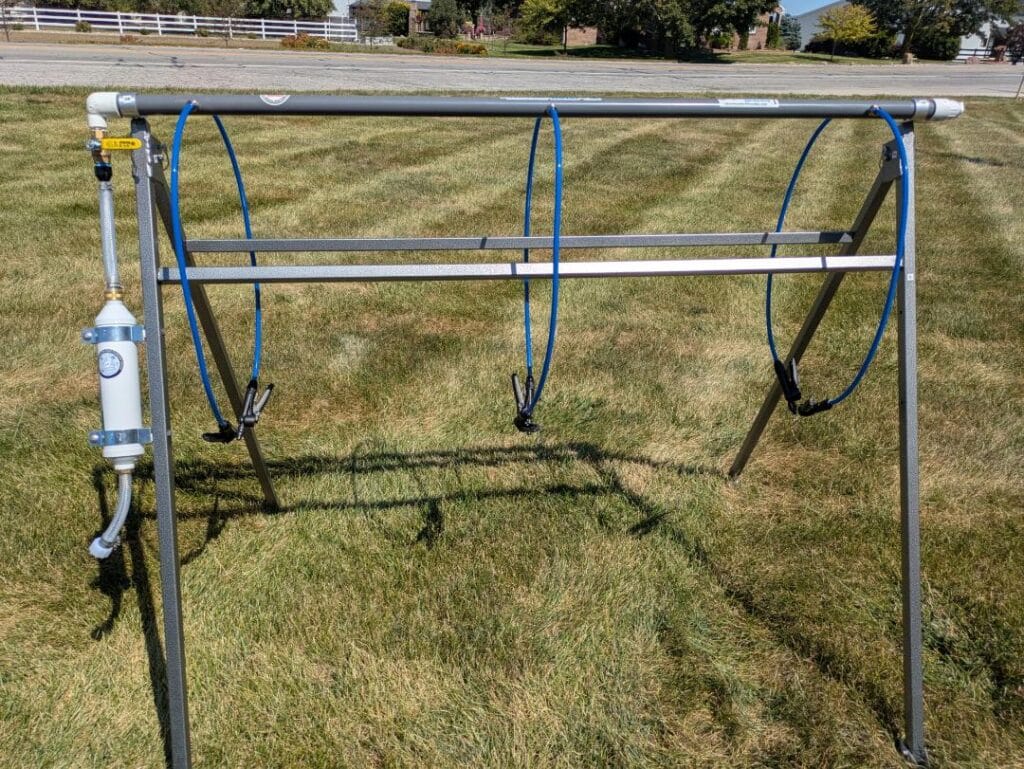
Excellent Team Hydration Station Tree | Serves 8
$590.00 -
Our #1 Game Day Package | Team Misting Fans Cooling Station + Hydration Tanker
Original price was: $5,750.00.$5,390.00Current price is: $5,390.00. -
Our Best Football Water Station Serves 6 In Pads
Original price was: $1,190.00.$1,090.00Current price is: $1,090.00. -
Portable 35 Gallon Rechargeable Water Wagon | Made In USA!
$3,190.00




Practice, Sideline, and Tournament Layouts
Everyday Practice
Place the primary station beside the team’s designated break area, outside active drill lanes. For split-field practices, position a secondary station near the other group when the route back to the main supply would be inconvenient. Keep access paths clear and confirm that equipment sits securely on the field surface.
Home Games
On game day, the sideline also serves substitutes, coaches, officials, and event staff. Set water equipment within the team’s permitted area without blocking substitution spaces, walkways, emergency routes, or field entrances. Requirements can vary by governing body and venue, so confirm the final position with event staff rather than following a universal sideline diagram.
Away Games and Tournaments
Before travel, ask the host whether drinking water is available, where carts may enter, and whether hoses or refill containers are permitted. Multi-game tournament days introduce additional challenges: staff may need to replenish water between matches, move the station to another field, or serve several teams in succession. Assign one person to manage the equipment rather than assuming refilling will happen automatically.
Cooling Equipment for Warm-Weather Lacrosse
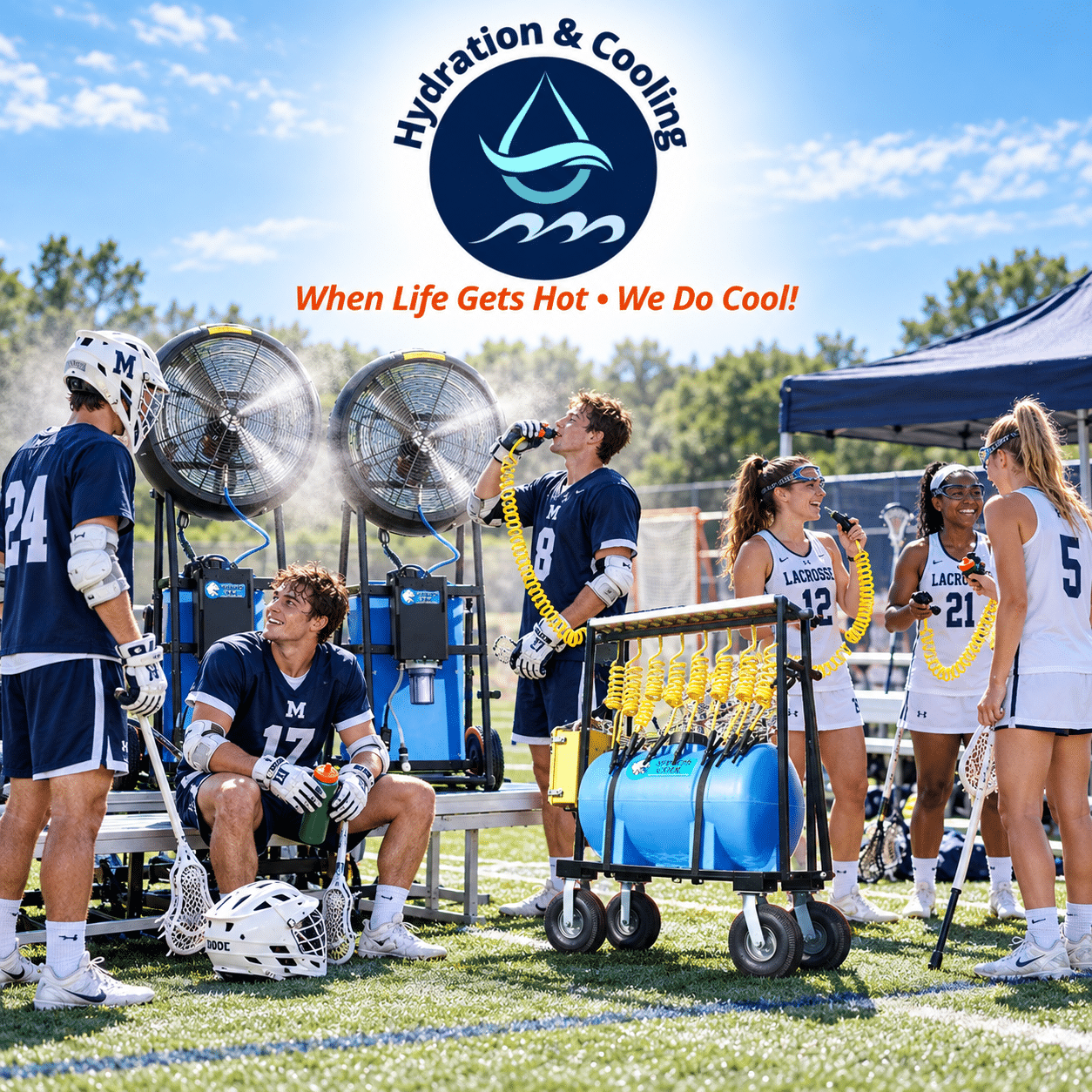
Spring lacrosse weather can vary considerably, while summer club tournaments and camps may create a different need for shade and cooling. During suitable outdoor events, outdoor misting fans can support athlete comfort in a designated team area. Confirm each model’s water and power requirements, venue permissions, and safe equipment placement.
Keep fans, cords, hoses, and wet areas away from play and walkways. Cooling equipment does not replace weather monitoring, practice modifications, emergency planning, or athletic-trainer guidance.
Sharing Equipment Across Men’s and Women’s Programs
Men’s and women’s lacrosse teams do not inherently require different categories of hydration equipment. The more useful questions concern roster size, practice schedules, storage, field surfaces, and available staff. A school may use the same tanker for successive lacrosse sessions or share a cooler cart with soccer, track and field, and other outdoor programs.
Shared use works best when someone owns the handoff. Decide who fills and transports the station, who inspects hoses and outlets, and who cleans and stores it after use. Use a written checklist and follow the manufacturer’s cleaning instructions; our hydration equipment maintenance resource can help frame that routine. Compare expected use across the department, not just one season.
The 90-Day Equipment Planning Timeline
90 Days Before Practice: Assess the Need
Review last season’s problems: queues, repeated refill trips, poor cart mobility, insufficient field access, or storage difficulties. Confirm which teams and fields will share equipment. Include input from coaches, athletic trainers, and the people who actually move and maintain the units.
60 Days Before Practice: Compare and Order
Evaluate realistic configurations and total purchasing requirements. Ask about current model specifications, lead times, power needs, accessories, and delivery arrangements. For schools, confirm any procurement or tax-exemption procedures in advance. Do not rely on assumed inventory or shipping dates.
30 Days Before Practice: Test the Setup
Inspect equipment, assign servicing responsibilities, and test transport routes with the actual field layout. Confirm the permitted sideline location and access to drinking-water refills. Check batteries or power connections where applicable, then prepare a simple setup and closing checklist.
During the Season: Keep It Ready
Have a backup plan for a station that cannot be moved, filled, or used as expected. Keep service and cleaning responsibilities consistent. At season’s end, document what should change before the next spring, fall, or summer program uses the equipment.
Conclusion
The right lacrosse hydration system is the one that fits the team’s operating reality. A smaller cart can be the practical choice near a convenient refill source; larger water wagons may better suit long event days or shared athletic facilities. Plan capacity, dispensing access, mobility, placement, and staff responsibilities together so equipment supports the program rather than complicating it.
Frequently Asked Questions
What hydration equipment does a lacrosse team need?
Most programs need a dependable drinking-water supply and a convenient dispensing location. Depending on their roster, field layout, and refill access, they may use a rolling cooler, hydration cart, water wagon, or multiple smaller stations.
Can a football water cow be used for lacrosse?
Yes. Water cows are portable team water systems, not equipment limited to football. They may suit lacrosse when the team needs the available capacity, dispensing access, and mobility.
Do men’s and women’s lacrosse programs need different equipment?
Not inherently. Base the purchase on roster size, practice organization, shared facilities, and transport needs rather than whether the program is men’s or women’s lacrosse.
How large should a lacrosse water station be?
There is no universal gallon size. Consider the number of users, duration and structure of activities, refill availability, and how many players need water access during the same break.
Where should hydration equipment go on a lacrosse sideline?
Use a permitted team area that provides convenient access without obstructing substitution activity, field boundaries, officials, walkways, or emergency routes. Confirm requirements with the host venue.
Can a school share lacrosse hydration equipment with other sports?
Yes, when capacity, field access, schedules, and maintenance arrangements allow it. Shared systems may be useful for soccer, football, track and field, and other outdoor activities.
Are misting fans necessary for every lacrosse season?
No. Their usefulness depends on weather, the event setting, and the available facility resources. They can supplement appropriate warm-weather equipment planning but do not replace a heat-safety program.
Need Help Choosing the Right Hydration System?
Hydration & Cooling has more than 25 years of experience helping coaches, athletic directors, schools, teams, equipment managers, and organizations choose hydration and cooling equipment appropriate to their needs and budgets. If you are preparing a lacrosse season or coordinating equipment across several outdoor sports, we can help you compare practical options.
Call 828-820-8600 | Monday–Friday, 10 AM–5 PM EST | contact Hydration & Cooling to discuss your program.
When Life Gets Hot • We Do Cool!