How much water does a football team need?
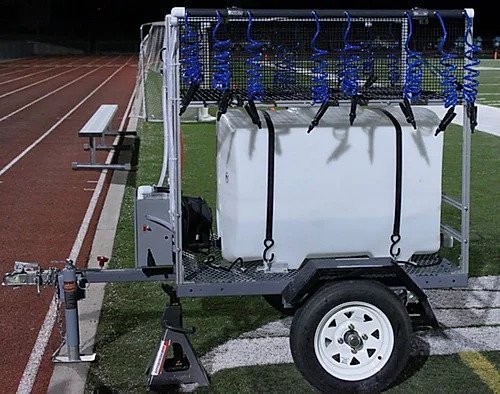
A football team can require hundreds of gallons of water during practices, camps, and game days depending on roster size, weather conditions, and activity duration. Many athletic programs use portable hydration systems and water wagons to ensure athletes have convenient access to water throughout training and competition.
- Football players lose significant fluids through sweat during practices and games.
- Water needs increase during hot and humid weather.
- Team size directly impacts hydration requirements.
- Multiple hydration stations help improve athlete access to water.
- Water wagons and portable hydration systems simplify large-scale hydration planning.
- A structured hydration strategy supports athlete safety and performance.
Key Takeaways
Football coaches, athletic directors, trainers, and equipment managers spend considerable time planning practices, conditioning sessions, camps, and game-day operations. One of the most important factors often overlooked until the last minute is hydration.
A football team’s water needs can vary dramatically depending on roster size, weather conditions, practice intensity, and the length of activity. Failing to plan properly can lead to dehydration, reduced athletic performance, and increased risk of heat-related illnesses.
Whether you’re managing a high school football team, a college program, a youth organization, or a professional training camp, understanding your hydration requirements is essential for athlete safety and operational success. The right football hydration equipment can help programs provide reliable access to water while supporting heat safety and practice efficiency throughout the season.
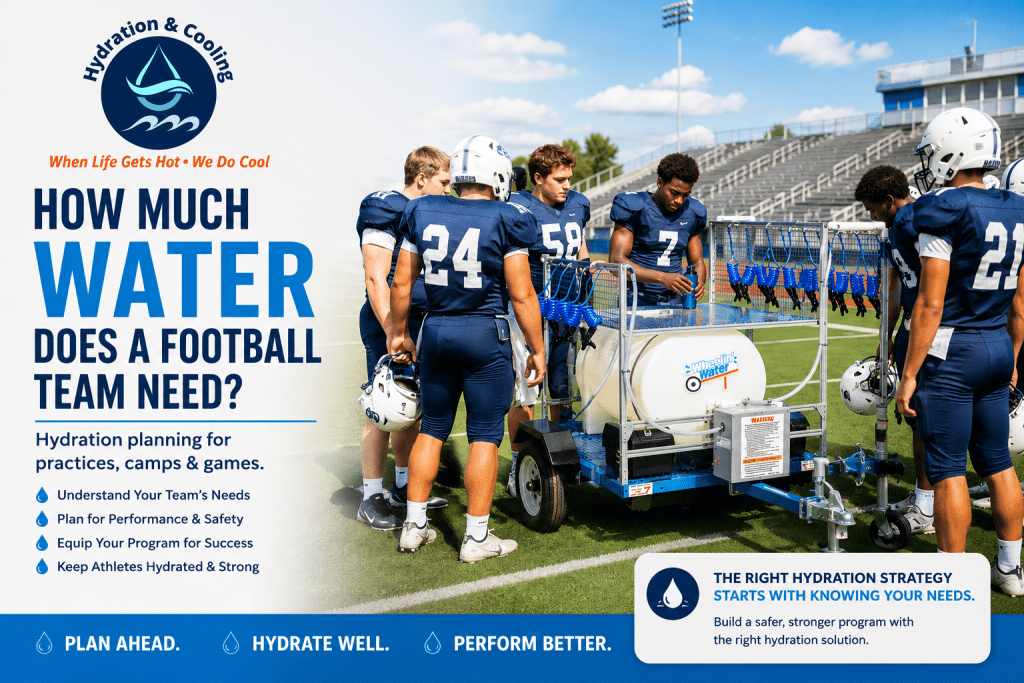
Table of Contents
Why Football Teams Need a Hydration Plan
Football places unique demands on athletes because of the intensity of the sport and the protective equipment worn during practices and games.
Athletes wearing helmets, shoulder pads, and other protective gear can generate substantial body heat during physical activity. As the body attempts to cool itself through sweating, fluids must be replaced consistently throughout the day.
Without a hydration plan, teams may experience:
- Reduced endurance
- Decreased performance
- Slower recovery
- Increased fatigue
- Greater heat stress
The larger the team, the more important hydration planning becomes.
Factors That Affect Water Consumption
No two football programs have identical hydration needs.
Several factors determine how much water a team may require.
Team Size
A youth football program with 25 athletes requires significantly less water than a varsity football program with 100 athletes and multiple practice squads.
The larger the roster, the greater the demand on hydration equipment and water storage capacity.
Weather Conditions
Heat and humidity increase fluid loss.
Football programs in southern states often experience greater hydration demands during summer conditioning and preseason camps than programs operating in cooler climates.
Practice Duration
A one-hour walk-through requires considerably less water than a three-hour practice featuring conditioning drills and full-contact periods.
Activity Intensity
Conditioning sessions, scrimmages, and game situations often require more frequent hydration opportunities than lower-intensity activities.
Estimating Water Needs by Team Size
While every program is different, coaches can use general estimates when planning hydration logistics.
Small Teams
25-40 Athletes
Programs of this size may require dozens of gallons of water throughout a practice session depending on environmental conditions.
Recommended products
-
50 Gallon Rechargeable Portable Water Wagon | 10 & 16 Hose Models – USA MADE!
$3,800.00 -
Best Team Sports Hydration Station – Rechargeable 35 Gallon Tanker For 8 Players
Original price was: $2,790.00.$2,590.00Current price is: $2,590.00.


Medium Teams
40-75 Athletes
Hydration demands increase substantially as roster sizes grow.
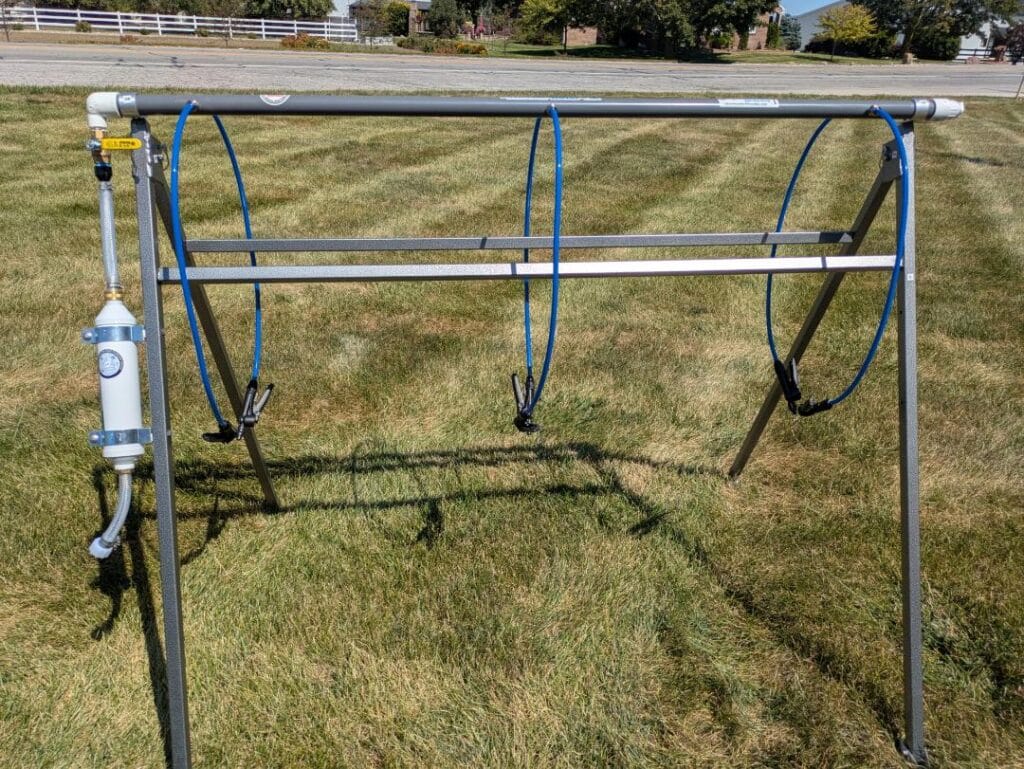
Multiple hydration access points often become necessary.
Recommended products
-
Best 65 Gallon Rechargeable Football Water Cow | Made In USA | New Low Price!
$5,090.00 -
Our Best Football Water Station Serves 6 In Pads
Original price was: $1,190.00.$1,090.00Current price is: $1,090.00.
Large Teams
75-150+ Athletes
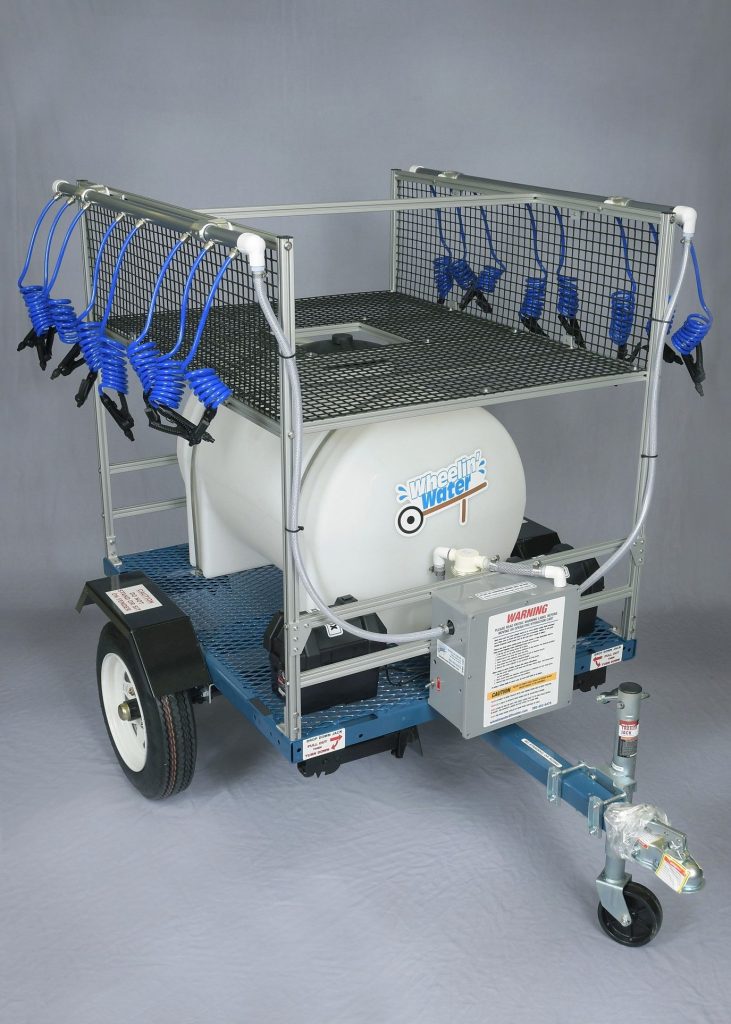
Large football programs frequently require high-capacity hydration solutions that allow many athletes to hydrate simultaneously without creating bottlenecks.
This is where portable hydration systems and water wagons often provide significant advantages.
Recommended products
-
Super 100 Gallon Rechargeable Football Hydration Station | Made In USA & New Low Price!
$5,790.00 -
Our #1 Game Day Package | Team Misting Fans Cooling Station + Hydration Tanker
Original price was: $5,750.00.$5,390.00Current price is: $5,390.00.

Water Requirements During Football Practices
Practice days often create the highest hydration demand.
Athletes may participate in:
- Warmups
- Individual drills
- Team drills
- Conditioning periods
- Scrimmage situations
Water should be easily accessible throughout practice.
Programs that rely on a single cooler often discover that athletes spend excessive time waiting in line rather than participating in drills.
Modern hydration systems allow multiple players to access water at the same time, improving both efficiency and athlete safety.
Water Requirements During Football Games
Game days present unique challenges.
Athletes require hydration before, during, and after competition.
Additional considerations include:
Larger Crowds
Games often involve larger rosters and support personnel.
Extended Timeframes
Athletes may spend several hours at facilities before kickoff.
Weather Exposure
Games often occur during periods of elevated temperatures and direct sunlight.
Having dedicated hydration equipment available on the sidelines helps ensure athletes can quickly hydrate between series and during breaks in play.
Football Team Water Planning Formula
Roster Size × Practice Length × Weather Conditions = Estimated Water Demand
Use the following guidelines when planning:
| Team Size | Mild Weather | Hot Weather | Extreme Heat |
|---|---|---|---|
| 25 Players | 15-25 Gallons | 25-40 Gallons | 40-60 Gallons |
| 50 Players | 30-50 Gallons | 50-80 Gallons | 80-120 Gallons |
| 75 Players | 45-75 Gallons | 75-120 Gallons | 120-180 Gallons |
| 100 Players | 60-100 Gallons | 100-160 Gallons | 160-250 Gallons |
| 125+ Players | 75-125 Gallons | 125-200 Gallons | 200-300+ Gallons |
Example
A high school football team with:
- 85 Players
- 2.5 Hour Practice
- August Heat and Humidity
May require well over 100 gallons of water during a single practice session.
Programs conducting:
- Two-a-day practices
- Summer football camps
- Multi-team scrimmages
- Tournament-style events
should plan for significantly higher water usage.
Why Coaches Often Underestimate Water Needs
Many programs calculate water requirements based only on roster size. However, water consumption increases when:
- Temperatures rise
- Humidity increases
- Practice length extends
- Conditioning periods are added
- Athletes wear full pads
- Multiple teams share hydration stations
This is why many athletic departments choose portable hydration systems and water wagons that provide larger capacities and allow multiple athletes to hydrate simultaneously without creating delays during practice.
Planning Ahead Improves Safety
Running out of water during practice isn’t simply inconvenient—it can interrupt training, reduce athlete performance, and create unnecessary heat-related risks. Proper hydration planning helps coaches, trainers, and athletic directors create a safer environment while keeping practices organized and efficient.
Related Resource:
👉 Need help selecting the right system? Read our Football Hydration Equipment Guide to compare water wagons, hydration stations, and portable hydration systems for your program.
Hydration Planning for Summer Camps
Summer football camps often represent the greatest hydration challenge of the year.
Factors include:
Multiple Daily Sessions
Many camps feature morning and afternoon training periods.
Elevated Temperatures
Summer weather significantly increases water demand.
Large Participant Numbers
Some camps host athletes from multiple teams or schools.
Because of these factors, many organizations invest in portable hydration systems capable of serving large groups throughout the day.
Why Traditional Water Coolers Often Fall Short
For small groups, traditional coolers may work adequately.
However, larger football programs frequently encounter challenges such as:
Limited Capacity
Frequent refilling interrupts operations.
Long Lines
Athletes spend valuable practice time waiting.
Transportation Issues
Moving multiple coolers across large facilities can be inefficient.
Sanitation Concerns
Managing shared coolers becomes more difficult as team sizes grow.
These limitations often lead programs to seek dedicated hydration equipment designed specifically for athletic environments.
Benefits of Portable Hydration Systems
Portable hydration systems offer several advantages for football programs.
Improved Efficiency
Multiple athletes can hydrate simultaneously.
Greater Capacity
Large water reserves reduce refill frequency.
Mobility
Systems can move between practice fields, stadiums, and training facilities.
Organization
Dedicated hydration equipment helps maintain structured water access throughout practices and games.
For many athletic departments, these benefits justify the investment in purpose-built hydration solutions.
Choosing the Right Hydration Equipment
Every football program should evaluate its specific needs before selecting equipment.
Consider Team Size
Larger rosters generally require larger-capacity systems.
Evaluate Practice Locations
Programs using multiple fields benefit from mobile hydration equipment.
Plan for Growth
Purchasing equipment that accommodates future expansion can provide long-term value.
Consider Heat Safety Goals
Hydration equipment should support the program’s overall athlete safety strategy.
Conclusion
The amount of water a football team needs depends on many factors, including roster size, weather conditions, practice schedules, and facility requirements. Successful programs recognize that hydration planning is an important part of athlete safety and operational efficiency.
As teams grow and hydration demands increase, portable hydration systems, water wagons, and dedicated hydration stations provide practical solutions that help athletes stay hydrated and coaches keep practices running smoothly.
Frequently Asked Questions
How much water does a football team need during practice?
Water requirements vary based on roster size, weather conditions, and practice duration, but larger teams may require hundreds of gallons throughout a day of activities.
Why is hydration important in football?
Proper hydration supports athletic performance, recovery, and heat safety during practices and games.
What is the best way to hydrate a large football team?
Many programs use portable hydration systems and water wagons that allow multiple athletes to access water simultaneously.
How often should football players drink water?
Athletes should hydrate regularly before, during, and after practices and games according to team hydration protocols.
What equipment helps football teams stay hydrated?
Common solutions include water wagons, hydration stations, portable hydration systems, and sideline cooling equipment.
Do football teams use water wagons?
Many high school, college, and professional football programs use water wagons to provide efficient hydration access.
How can coaches improve team hydration?
Establishing hydration schedules and providing easy access to water throughout activities can help improve hydration practices.
Are hydration stations better than coolers?
For larger teams, hydration stations often improve efficiency and athlete access compared to traditional coolers.
How much water should athletes drink in hot weather?
Hydration needs increase significantly during hot weather and should be monitored carefully.
What should athletic directors consider when planning hydration?
Team size, weather conditions, practice schedules, facility layout, and equipment capacity should all be considered.
Need Help Choosing the Right Hydration System?
Whether you’re outfitting a high school football program, college athletic department, professional sports team, construction site, tournament complex, or parks and recreation facility, choosing the right hydration equipment can feel overwhelming. Capacity requirements, portability, athlete safety, budget considerations, and field logistics all play an important role in selecting the best solution.
With more than 25 years of experience helping coaches, athletic directors, equipment managers, safety coordinators, and purchasing departments, the team at Hydration & Cooling understands the unique hydration and cooling challenges organizations face every day.
If you’re unsure which water wagon, portable hydration system, hydration station, misting fan, or cooling solution best fits your needs and budget, we’re happy to help.
📞 Call us at 828-820-8600
Monday–Friday, 10:00 AM–5:00 PM EST
Our experienced team can answer your questions, discuss your goals, and recommend hydration and cooling equipment solutions that support athlete safety, improve efficiency, and fit your budget.
Ready to get started? Contact us today and let us help you find the right hydration solution for your team or organization.
Our Football Team Hydration Systems
-
50 Gallon Rechargeable Portable Water Wagon | 10 & 16 Hose Models – USA MADE!
$3,800.00 -
Best 65 Gallon Rechargeable Football Water Cow | Made In USA | New Low Price!
$5,090.00 -
Best Team Sports Hydration Station – Rechargeable 35 Gallon Tanker For 8 Players
Original price was: $2,790.00.$2,590.00Current price is: $2,590.00. -

Efficient 20 Player Team Practice Hydration Package | Our Hydration Station Combo
$3,390.00 -
Our #1 Game Day Package | Team Misting Fans Cooling Station + Hydration Tanker
Original price was: $5,750.00.$5,390.00Current price is: $5,390.00. -
Portable 35 Gallon Rechargeable Water Wagon | Made In USA!
$3,190.00 -
Super 100 Gallon Rechargeable Football Hydration Station | Made In USA & New Low Price!
$5,790.00
