
Key Takeaways
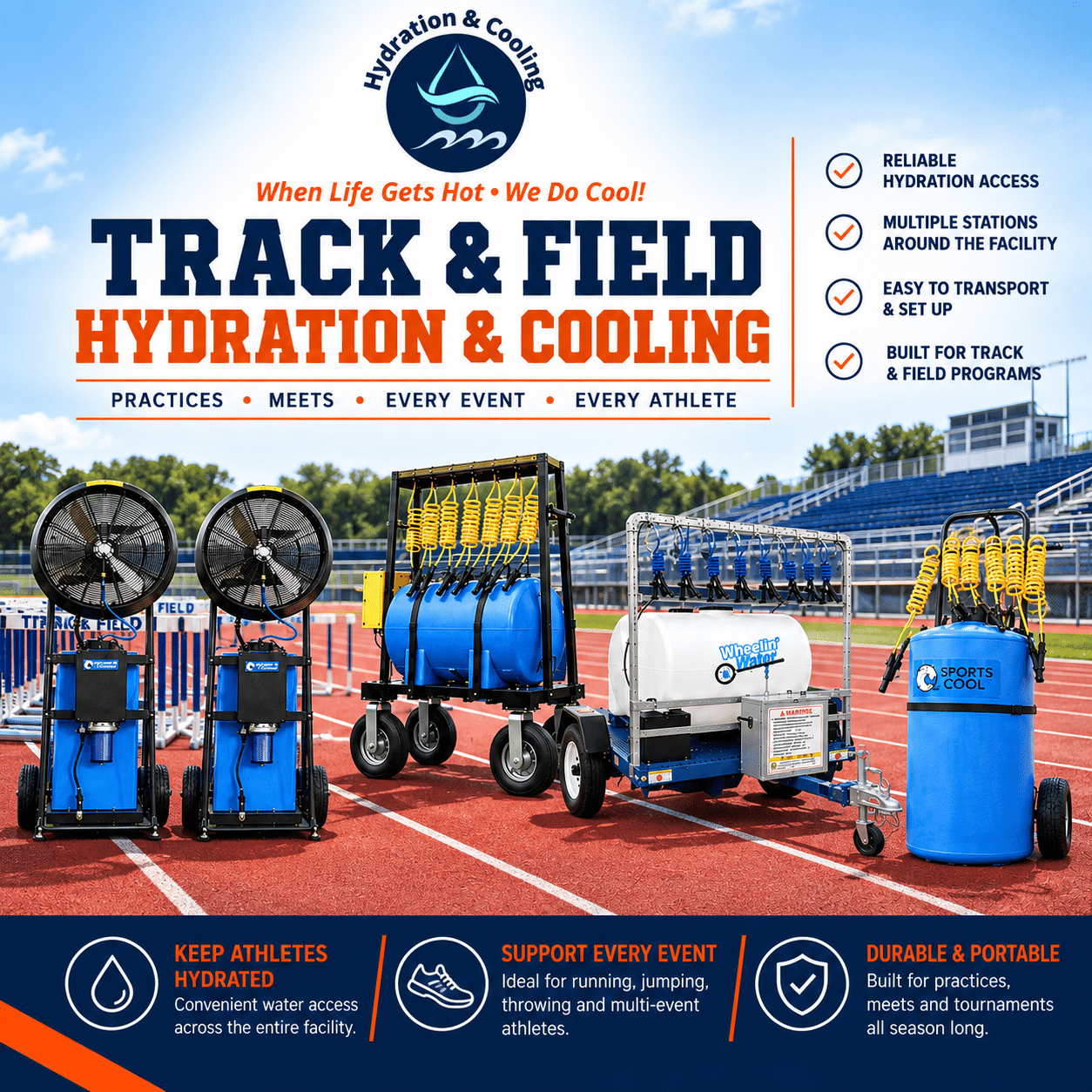
Track and field programs need organized hydration access and practical cooling support across practices, competitions, warm-up areas, field events, and team staging areas. Because track and field combines running, jumping, throwing, and multi-event competitions, athletes and staff may be working in different parts of a facility at the same time.
A well-planned hydration and cooling setup gives coaches, athletic trainers, equipment managers, and operations staff a practical way to organize water access and cooling resources around the venue.
For schools, colleges, universities, and other athletic organizations, the right setup may include mobile water wagons, hydration stations, portable water systems, cooling equipment, and equipment designed for transport and replenishment.
What Hydration and Cooling Equipment Does a Track and Field Program Need?
A track and field hydration and cooling setup typically includes mobile water systems or hydration stations, accessible water supply, equipment for transporting and replenishing water, and appropriate cooling resources for team areas, warm-up areas, and other designated locations. The right combination depends on the size of the program, facility layout, practice schedule, competition schedule, available water and power, and how equipment needs to be moved around the venue.
TL;DR
A track and field hydration and cooling plan should account for the entire venue rather than only the track itself.
Key considerations include:
- Hydration access near team and staging areas
- Water access for practices and competitions
- Mobile equipment that can be moved around the facility
- Hydration support for field-event areas
- Cooling resources for designated athlete areas
- Water and power requirements
- Equipment transportation and setup
- Replenishment during longer practices and meets
- Shared equipment for men’s and women’s programs
The best equipment configuration depends on the facility, number of athletes, event schedule, and operational requirements.
Table of Contents
Hydration Equipment for Track and Field Programs
Track and field facilities can cover a substantial area. A single competition venue may include the track, infield, throwing areas, jumping areas, warm-up spaces, team areas, staging areas, and locations used by coaches and support staff.
That makes equipment placement an important part of hydration planning.
A track and field hydration system may include:
- Mobile water wagons and hydration systems
- Portable hydration stations
- Water access for practices and competitions
- Equipment for transporting and replenishing water
- Shared hydration equipment for men’s and women’s programs
- Equipment positioned near team and staging areas
Mobile hydration equipment is particularly useful when athletes and staff need water access in locations that are not directly adjacent to permanent plumbing.
For athletic departments managing multiple sports, mobile equipment can also provide flexibility between practices, competitions, and different facilities.
Track and Field Hydration Station Placement
Hydration stations should be positioned according to how athletes and staff actually move through the facility.
The track itself is only one part of the operating environment.
Depending on the facility, hydration equipment may be located near:
- Team areas
- Warm-up areas
- Athlete staging areas
- Field-event areas
- Practice locations
- Competition support areas
Placement should provide convenient access without creating obstacles around competition areas or interfering with officials, athletes, equipment, or event operations.
For large facilities, multiple hydration locations may be more practical than relying on one centralized water source.
When planning station placement, athletic departments should consider the distance between event areas, the number of athletes using each location, how equipment will be replenished, and how staff will move equipment before and during an event.
Hydration Support for Different Track and Field Events
One of the reasons track and field requires flexible hydration planning is that multiple event groups can operate simultaneously.
Distance Running
Distance athletes may spend extended periods training or competing on the track or road-course portions of an event.
Hydration planning should account for the location of team areas, training routes, competition schedules, and available water access.
Sprints and Hurdles
Sprint and hurdle programs often have concentrated warm-up, competition, and staging periods.
Hydration equipment can be positioned near designated team or athlete areas while keeping competition pathways clear.
Jumps
Long jump, triple jump, high jump, and pole vault operations may occur away from the primary team area.
Hydration access should therefore be considered when planning equipment placement for field-event locations.
Throws
Shot put, discus, hammer, and javelin areas may be separated from other portions of the facility.
For facilities with widely distributed event areas, mobile hydration equipment can provide additional flexibility.
Multi-Event Athletes
Heptathlon and decathlon competitions involve multiple events over extended competition schedules.
Because athletes move between event areas, hydration and cooling resources may need to be coordinated across the venue rather than concentrated in a single location.
Cooling Equipment for Track Meets
Hydration access is only one component of a comprehensive track and field heat-preparedness plan.
Programs may also use cooling equipment and designated cooling areas depending on their facility, operating requirements, and available resources.
Cooling solutions may include equipment such as:
- Misting systems
- Portable cooling equipment
- Designated shaded areas
- Cooling resources positioned near team areas
- Other manufacturer-approved cooling solutions
When selecting track and field cooling equipment, athletic departments should consider the physical layout of the facility as well as water, power, transportation, and setup requirements.
Equipment should be installed and operated according to manufacturer instructions and applicable facility requirements.
Track Meet Cooling Considerations
Before purchasing or deploying cooling equipment, staff should determine:
- Where athletes spend time between events
- Where equipment can safely be positioned
- How equipment will be transported
- Whether water is required
- Whether electrical power is required
- How equipment will be replenished
- Who is responsible for setup and operation
- How equipment will be stored between events
Misting Fans Cooling Equipment
-

24″ Misting Fans For Team | Powerful Outdoor Misting Cooling System
$2,590.00 -
Our #1 Game Day Package | Team Misting Fans Cooling Station + Hydration Tanker
Original price was: $5,750.00.$5,390.00Current price is: $5,390.00.

Planning Hydration and Cooling for Track Meets
Track meets can involve multiple schools, numerous events, large numbers of athletes, and constantly changing schedules.
A written equipment plan helps athletic departments identify where hydration and cooling resources will be located before the competition begins.
Before a meet, staff can review:
Facility Layout
Identify the track, field-event areas, warm-up locations, team areas, staging areas, and other locations where hydration or cooling equipment may be needed.
Athlete and Team Count
Consider the number of athletes, teams, coaches, and support personnel using each area.
Water Supply
Determine how equipment will be filled, replenished, transported, and serviced throughout the event.
Cooling Resources
Identify the cooling equipment available and where it will be positioned.
Transportation
Plan how equipment will move from storage to the venue and between locations when necessary.
Staff Responsibilities
Assign responsibility for setup, replenishment, operation, and post-event storage.
Competition Access
Make sure equipment placement does not obstruct competition areas, athlete pathways, officials, or venue operations.
This type of planning supports consistent hydration and cooling operations across regular practices, dual meets, invitationals, conference competitions, and larger track and field events.
Supporting Men’s and Women’s Track and Field
Athletic departments frequently manage men’s and women’s track and field as related programs that share facilities, equipment, staff, and operational resources.
Shared hydration and cooling equipment can provide flexibility while allowing each program to maintain its own practice and competition schedule.
A department may be able to move equipment between locations based on:
- Practice schedules
- Competition schedules
- Facility availability
- Athlete population
- Event locations
- Weather conditions
- Staffing requirements
The appropriate configuration depends on the individual athletic department rather than whether a program is men’s or women’s.
For departments managing both programs, equipment standardization can also simplify training for staff responsible for setup, transportation, replenishment, and storage.
Choosing Track and Field Hydration Equipment
There is no single hydration setup that fits every track and field facility.
Before selecting equipment, athletic departments should evaluate several practical factors.
Facility Size
A larger facility may require multiple hydration locations or equipment that can be transported between areas.
Number of Athletes
The number of athletes using each location affects station placement and replenishment requirements.
Practice Schedule
Daily practices may require a different setup from a competition with multiple schools.
Competition Schedule
Longer meets and multi-event competitions may require additional planning for water and cooling resources.
Mobility
If equipment needs to move between the track, field-event areas, and team areas, mobility becomes an important consideration.
Water and Power
Some equipment requires access to water, electricity, or other site-specific resources.
Storage
Athletic departments should consider where equipment will be stored between practices and competitions.
Transportation
Equipment used at multiple facilities should be practical to move, load, unload, and set up.
Build a Track and Field Hydration and Cooling Plan
A strong track and field hydration and cooling plan starts with the facility and the way the program operates.
Instead of selecting equipment first and determining where it fits later, athletic departments can begin by identifying the locations, schedules, athlete populations, and operational requirements that the equipment needs to support.
From there, staff can determine:
- Where hydration access is needed
- Where cooling resources should be available
- Which equipment needs to remain stationary
- Which equipment needs to be mobile
- How water and other resources will be replenished
- How equipment will be transported
- Who will handle setup and operation
- Where equipment will be stored
This approach allows the hydration and cooling system to become part of the overall track and field operations plan.
Frequently Asked Questions
What hydration equipment does a track and field program need?
Track and field programs may use mobile water wagons, hydration stations, portable water systems, and equipment for transporting and replenishing water. The appropriate setup depends on the facility, number of athletes, event schedule, and available infrastructure.
Where should hydration stations be placed at a track meet?
Hydration stations can be positioned near team areas, warm-up areas, staging areas, and other designated locations where athletes and staff need convenient water access. Placement should account for facility layout and should not interfere with competition operations.
What cooling equipment can track and field programs use?
Depending on facility requirements, programs may use misting equipment, portable cooling systems, shaded areas, and other designated cooling resources. Equipment should be selected and operated according to manufacturer and venue requirements.
Do men’s and women’s track and field programs need separate hydration equipment?
Not necessarily. Shared equipment can support both programs when schedules, facility layout, athlete populations, and operational requirements allow. Departments can move equipment between practices and competitions as needed.
What should schools consider when buying track and field hydration equipment?
Schools should consider the number of athletes, facility size, event locations, practice and competition schedules, mobility requirements, water and power availability, replenishment, transportation, and storage.
Conclusion
Track and field hydration and cooling planning requires more than placing a water source beside the track.
The combination of running events, field events, warm-up areas, team spaces, and extended competition schedules means athletic departments need equipment that fits the way their facilities actually operate.
Mobile hydration systems, strategically positioned hydration stations, and appropriate cooling equipment can give coaches and operations staff practical resources for organizing water access and cooling support throughout practices and competitions.
The right solution depends on the facility, program size, event schedule, available infrastructure, and operational requirements.
Need Help Choosing the Right Hydration System?
Hydration & Cooling has more than 25 years of experience helping coaches, athletic directors, schools, teams, equipment managers, and organizations select hydration and cooling equipment appropriate for their needs and budget.
828-820-8600
Monday–Friday, 10 AM–5 PM EST