The Big Picture
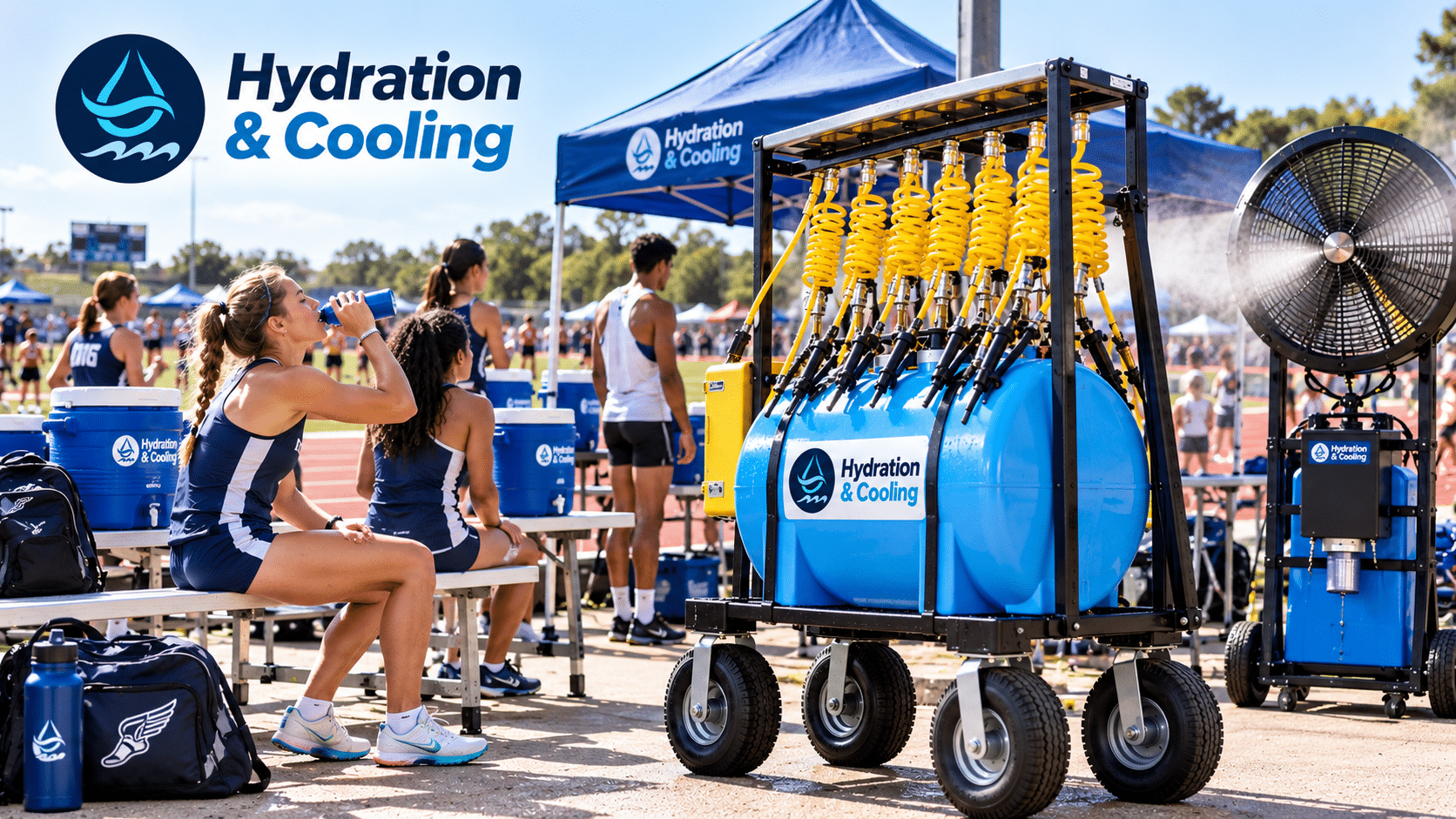
Traveling to an away track meet creates a different hydration equipment challenge from hosting an event at your own facility.
Coaches and equipment managers may know exactly where water, storage, and electrical outlets are located at their home track. At an unfamiliar venue, those details may be uncertain until someone contacts the host school or walks the facility.
A track meet can also last several hours, with athletes competing in running, jumping, throwing, and combined events at different times. Teams may need water access near their assigned team area while keeping portable equipment ready for approved locations elsewhere at the venue.
A practical track meet hydration equipment checklist helps schools prepare before departure, organize their equipment on arrival, plan refills, and avoid leaving important components behind.
This guide focuses on the logistics of traveling with water coolers, portable hydration stations, water wagons, and related equipment—not on prescribing individual fluid intake.
Key Insight: What Hydration Equipment Should a Track Team Bring to an Away Meet?
A track team should bring hydration equipment suited to its roster size, meet duration, host-facility water access, and transportation capacity. Depending on the program, that may include portable water coolers, a wheeled hydration station or water cow, suitable drinking-water filling equipment, approved dispensing accessories, and cleaning supplies. Staff should confirm where equipment can be unloaded, positioned, refilled, and stored before traveling.
What Matters Most
- Confirm what drinking water and utilities the host facility provides.
- Choose equipment based on your traveling roster and available refills.
- Inspect, clean, and prepare equipment before departure.
- Account for the size, weight, and transport requirements of water-filled tanks.
- Position stations only in host-approved areas.
- Designate someone to monitor water supply and coordinate replenishment.
- Plan the return trip, including draining, cleaning, and storage.
- Keep a written checklist so the process can be repeated at every away meet.
Table of Contents
Why Away Meets Require Different Hydration Planning
Track and field involves several competition areas and a schedule that can change throughout the day.
A sprint group may be warming up while distance runners are preparing for another event. Throwers and jumpers may be working in separate areas, sometimes a considerable distance from the team gathering space.
At an away meet, your program may have limited control over those locations.
A visiting team should not assume it can move a large water tanker onto the infield, place a cooler beside a throwing sector, or connect equipment to a nearby outlet.
That is why the first step is understanding the host facility’s arrangements.
For a broader discussion of equipment and facility coverage, see our men’s and women’s track and field hydration and cooling guide.
Choosing Equipment for Your Traveling Track Team
Portable Water Coolers
Portable coolers can be a practical choice for smaller squads, short meets, or facilities with convenient refill points.
Their usefulness depends on water capacity, dispensing access, how they will be carried or moved, and whether the team needs several coolers in different approved locations.
Staff should compare the complete configuration rather than assuming every cooler has the same capacity or dispensing features.
Wheeled Hydration Stations and Water Wagons
Larger teams may benefit from mobile water stations that can be positioned near a designated team area.
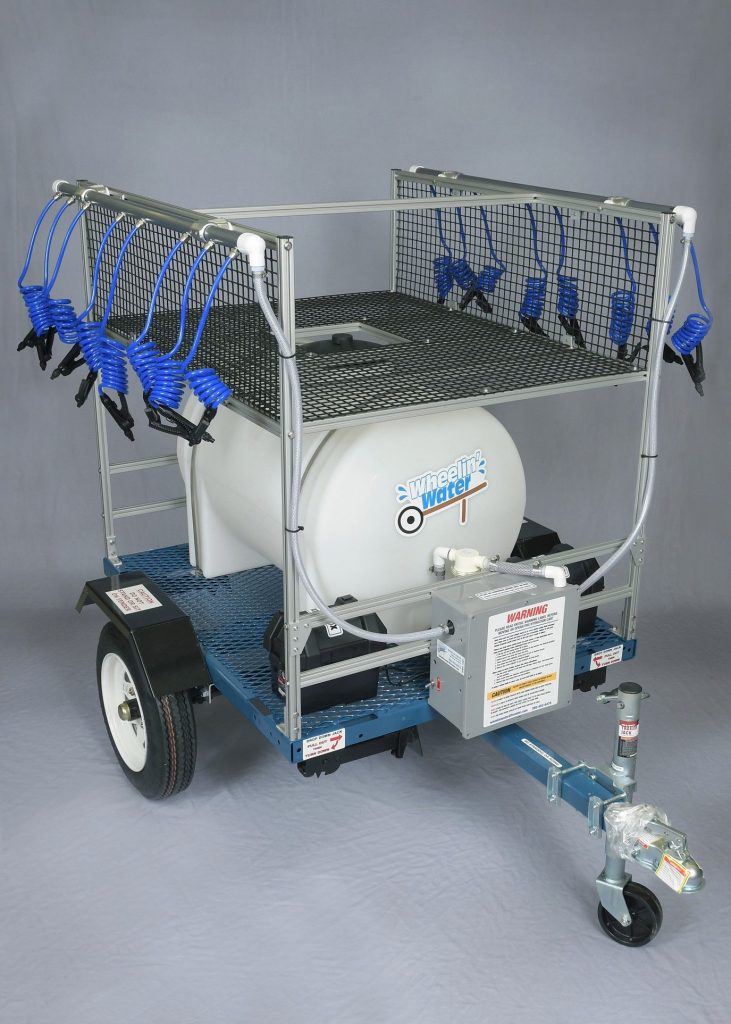
A water wagon or wheeled station may offer more centralized capacity than several individually carried coolers. It also requires suitable transport, unloading, and movement across the host facility.
Our portable team hydration systems guide explains why mobility matters when athletic equipment must move between locations.
Water Cows for Traveling Programs
A water cow is a mobile hydration tanker designed to carry and dispense drinking water for team use.
Although commonly associated with football, water cows can also support track and field and other outdoor athletic programs when their size, mobility, and dispensing arrangement suit the facility.
Browse our sports hydration tankers to compare available equipment configurations.
Before selecting a water cow for away meets, verify its dimensions, transport requirements, filling procedures, approved operating surfaces, and power needs.
A larger tank is not automatically more convenient for travel.
Our Portable Hydration Equipment
-
50 Gallon Rechargeable Portable Water Wagon | 10 & 16 Hose Models – USA MADE!
$3,800.00 -
Best 65 Gallon Rechargeable Football Water Cow | Made In USA | New Low Price!
$5,090.00 -
Best Team Sports Hydration Station – Rechargeable 35 Gallon Tanker For 8 Players
Original price was: $2,790.00.$2,590.00Current price is: $2,590.00. -

Constant Chill Sports Cool Cart | Hydrates 6 Athletes
$1,290.00 -

Efficient 20 Player Team Practice Hydration Package | Our Hydration Station Combo
$3,390.00 -

Excellent Team Hydration Station Tree | Serves 8
$590.00 -
Our #1 Game Day Package | Team Misting Fans Cooling Station + Hydration Tanker
Original price was: $5,750.00.$5,390.00Current price is: $5,390.00. -
Our Best Football Water Station Serves 6 In Pads
Original price was: $1,190.00.$1,090.00Current price is: $1,090.00. -
Portable 35 Gallon Rechargeable Water Wagon | Made In USA!
$3,190.00




Track Meet Hydration Equipment Packing Checklist
An equipment checklist should be created around the actual models your team uses.
Quick-Check Packing List for Away Track Meets
- Water coolers, water wagons, or mobile hydration stations
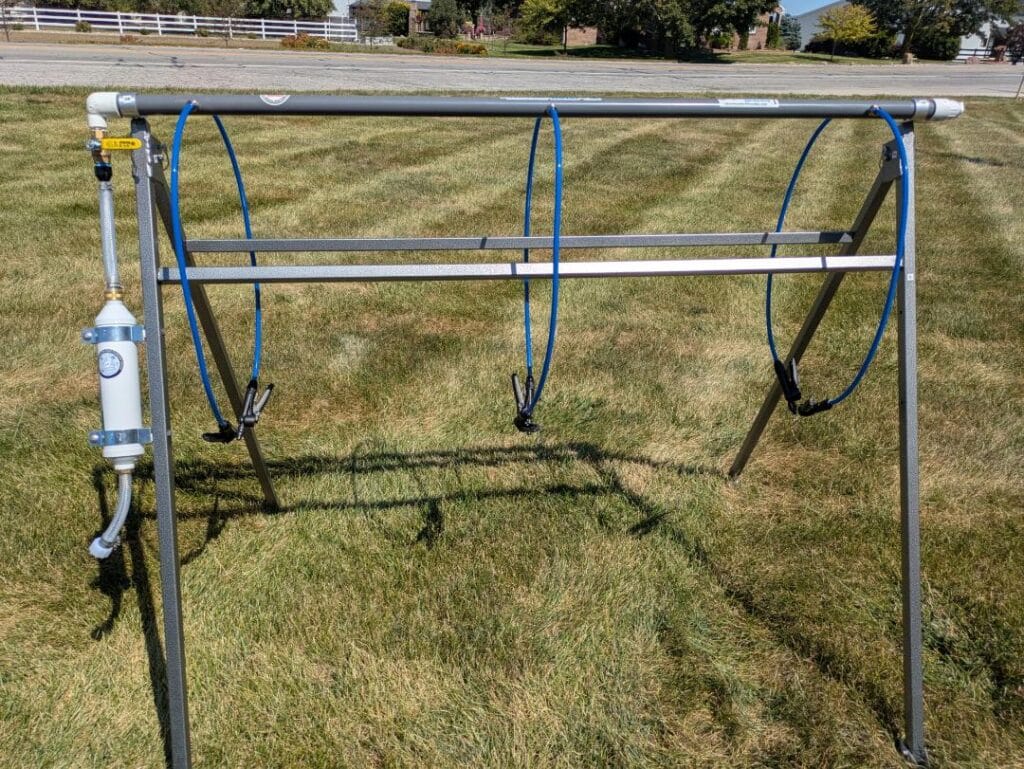
- Required drinking hoses, nozzles, fittings, and caps
- Approved drinking-water filling accessories
- Equipment cleaning and maintenance supplies
- Charging equipment, if required and permitted
- Equipment inventory and manufacturer instructions
- Transportation and securing arrangements confirmed
- Host school’s drinking-water and refill locations confirmed
- Approved unloading and equipment placement locations confirmed
- Staff members assigned to setup, refilling, and breakdown
Drinking-Water Equipment
Confirm that you have packed the selected water cooler, mobile station, or tanker and all required dispensing components.
Check manufacturer-approved hoses, nozzles, fittings, and caps where applicable.
Make sure each item is clean, operational, and suitable for drinking-water service.
Refilling Equipment
Confirm what is needed to connect to the host’s approved drinking-water source.
If a filling hose is required, verify that it is suitable for potable water, compatible with the equipment, and permitted by the host facility.
Do not assume every outdoor faucet supplies drinking water or that every hose connection will be available to visiting teams.
Transportation and Handling Equipment
Check wheels, handles, frames, and any authorized securing equipment needed for loading and unloading.
Know which staff members are responsible for moving each unit.
For rechargeable equipment, check battery status and pack only the charging accessories specified for the system, when permitted at the venue.
Cleaning and Support Supplies
Bring suitable wipes, cloths, or other cleaning materials required by the equipment instructions.
Have a method for isolating damaged components or equipment that should not be returned to service.
Keep the relevant manufacturer instructions accessible to the staff member responsible for the station.
Equipment Records
Carry a short equipment inventory with model identification, required accessories, assigned staff, and the expected return items.
A simple record reduces confusion when several people help with setup and breakdown.
What to Confirm With the Host School
Before leaving campus, contact the host’s meet director, athletics department, or designated facility representative.
Drinking-Water Availability
Ask where visiting teams may obtain drinking water and whether the source is accessible throughout the meet.
Confirm any restrictions on fill hoses, containers, and equipment movement.
Knowing where refills will come from may affect which equipment your team brings.
Approved Equipment Locations
Ask whether visiting teams have assigned areas and what equipment is permitted there.
Also confirm whether mobile stations may be moved elsewhere during competition.
Running lanes, warm-up routes, throwing areas, field-event sectors, emergency access points, and officials’ workspaces must remain unobstructed.
Unloading and Parking
Find out where equipment may be unloaded and whether carts can be brought through the designated entry gates.
Confirm any stairs, narrow passageways, uneven ground, or access restrictions that could complicate moving a filled or heavy system.
Electrical Access
If you are considering powered or rechargeable equipment, confirm whether electrical outlets are available and authorized for visiting-team use.
Do not assume access to a stadium outlet, extension cord route, or generator location.
Transportation and Loading
Water equipment should be transported according to its manufacturer’s instructions and the vehicle’s loading requirements.
A water tank becomes considerably heavier when filled. For reference, a gallon of water weighs approximately 8.3 pounds, before accounting for the tank, frame, and other equipment.
That added weight can affect handling, vehicle load limits, and securing arrangements.
Do not assume a water wagon or tanker can be transported full. Verify whether the specific model permits transporting water, how it must be secured, and whether the available vehicle is suitable.
For many teams, filling equipment at an approved destination may be more practical than transporting a large quantity of water.
Staff should also confirm that loading equipment does not exceed the vehicle’s capacity and that the unit is properly secured.
If a department uses the same water cow for several programs, our multi-sport water cow guide provides additional context on shared equipment applications.
Setting Up at the Track Meet
Begin With the Assigned Team Area
Once the team arrives, confirm the assigned location before unloading large equipment.
Identify a stable, approved surface that allows access without creating an obstacle.
A station should not interfere with event operations, pedestrian flow, or designated emergency routes.
Keep Water Access Organized
Place the equipment where authorized athletes and staff can reach it conveniently.
If a team brings several coolers or stations, agree on their locations so personnel know which equipment they are responsible for monitoring.
The goal is organized access, not unnecessary duplication of stations.
Account for Field Events
Jumping and throwing areas may be separated from the main team gathering area.
Ask the host whether supplementary portable water equipment is permitted near designated staging or team spaces.
Never place stations inside competition sectors or restricted areas simply because those locations seem convenient.
Test Before Athletes Need the Equipment
After positioning and filling the system, test its dispensing components.
Check for leaks, restricted flow, loose connections, or operating problems.
Resolve concerns before returning the equipment to service.
Water Refills During Long Meets
An away meet may involve several hours of competition, warm-ups, delays, and transitions between events.
A practical refill plan should identify three things: who monitors the station, where approved drinking water is available, and how equipment will be replenished without interfering with competition.
Assign One Person to Monitor Supply
Designate an equipment manager, authorized assistant, or other responsible staff member to monitor the station.
That person should know the refill location and the procedure for moving or refilling the equipment.
Consider the Entire Meet Schedule
Refill planning should account for the traveling roster, event timing, available dispensing positions, and other users of the station.
Do not select a water capacity solely because a product is advertised for a certain number of athletes.
Actual equipment needs vary with the meet and its available water infrastructure.
Prepare for Schedule Changes
Track meets may run behind schedule or be interrupted by weather.
Staff should know where drinking water can be obtained if the event lasts longer than anticipated.
If the host’s refill arrangements change, coordinate directly with facility personnel rather than using an unverified water source.
Cooling Equipment for Away Meets
Some programs also travel with portable cooling equipment.
Depending on the venue, that may include permitted misting fans or other equipment used in designated athlete areas.
Cooling equipment requires its own planning.
Confirm transport space, electrical or battery requirements, approved locations, water supply needs, and operating restrictions.
Misting fans should not be placed where moisture could affect competition surfaces, electrical safety, or event operations.
Cooling equipment supplements a school’s established heat-safety procedures. Decisions about athlete health, activity modification, and medical care remain with authorized sports medicine personnel and meet officials.
Breakdown and Post-Meet Maintenance
Equipment responsibilities do not end when the final event finishes.
Count and Inspect Equipment
Before loading, check the equipment against the original inventory.
Account for removable dispensing components, approved fittings, charging accessories, and other items brought to the venue.
Inspect for new damage or missing parts.
Drain and Prepare Equipment for Transport
Follow the manufacturer’s procedures for draining and preparing the station.
If equipment contains remaining water, follow the model’s transport instructions. Do not assume it can safely travel with water inside.
Secure each item according to the vehicle and equipment requirements.
Clean Equipment After Returning
Once equipment is back at the school’s facility, complete the required cleaning, sanitizing, draining, drying, and storage procedures.
Our sports hydration equipment maintenance guide provides additional information about routine equipment care.
Record any leaks, damaged components, or maintenance issues before the equipment is assigned to another team.
Sample Equipment Responsibility Plan
A straightforward responsibility plan can make away-meet operations easier to repeat.
Before departure: The equipment manager checks the inventory, condition, transportation arrangements, and power requirements.
Upon arrival: The designated staff member confirms the host-approved location and available drinking-water source.
During the meet: An assigned person monitors the station and coordinates refills.
After competition: Staff inspect, count, drain, and secure equipment for the trip home.
Back at school: The responsible personnel complete cleaning, maintenance records, and storage.
For athletic departments using water equipment across different seasons, our multi-sport hydration schedule and planning resource discusses shared equipment scheduling.
Conclusion
Preparing hydration equipment for an away track meet is primarily a matter of planning.
Schools need to know what equipment they are taking, whether it can be transported safely, where the host permits it to operate, how it will be refilled, and who is responsible for bringing it home.
Portable coolers, wheeled stations, and water cows can each play a role depending on the team’s size, the venue, and the available infrastructure.
A repeatable equipment checklist helps coaches and athletic departments make appropriate decisions without purchasing unnecessary equipment or depending on assumptions about another school’s facilities.
Frequently Asked Questions
What should a track team pack for hydration at an away meet?
A track team should pack suitable water coolers or portable hydration stations, required dispensing components, approved filling accessories, and maintenance supplies. The exact equipment depends on the traveling roster, meet duration, transport capacity, and host-facility water access.
Is a water cow practical for track and field meets?
A water cow may be practical for larger programs or venues where a mobile hydration tanker can be transported, positioned, and refilled appropriately. Teams should verify the model’s transport requirements and the host facility’s equipment restrictions.
Should a track team transport its water tanker full?
Only if the equipment manufacturer permits that method of transport and the available vehicle and securing arrangements are suitable. Water adds substantial weight, so filling the equipment at an approved destination may be preferable.
Where should visiting teams place hydration stations at a track meet?
Visiting teams should use locations approved by the host facility, typically within designated team or staging areas. Equipment must not obstruct competition areas, pedestrian routes, or emergency access.
How can teams plan water refills during a long track meet?
Before traveling, confirm the host’s approved drinking-water sources, identify who will monitor equipment, and establish a refill procedure. The plan should account for the team’s size, dispensing needs, and possible schedule changes.
Can portable misting fans be used at track meets?
Portable misting fans may be suitable when the host facility permits them and the equipment can be operated according to manufacturer instructions. Placement should not interfere with events, electrical safety, or designated competition areas.
How should hydration equipment be handled after an away meet?
Staff should inspect and inventory the equipment, prepare it for transport according to manufacturer instructions, and complete required cleaning, sanitizing, drying, and storage procedures after returning to school.
Need Help Choosing the Right Hydration System?
Hydration & Cooling brings more than 25 years of experience helping schools, coaches, athletic directors, and equipment managers compare practical hydration and cooling equipment for athletic programs.
Whether your track team needs portable water coolers, a mobile hydration station, or a larger water cow for traveling competitions, we can help you evaluate available options around your actual needs.
Call Hydration & Cooling: 828-820-8600
Monday–Friday, 10 AM–5 PM EST
Tell us about your track team, the meets you travel to, and the equipment you already own. We’ll help you identify suitable options.