
The Big Picture
A football sideline hydration station needs to do more than hold enough water for the team. It must be ready before kickoff, accessible during scheduled breaks, easy for staff to monitor, and positioned without interfering with game-day operations.
For high school, college, and professional football programs, the challenge is coordinating equipment, water supply, dispensing access, and staff responsibilities. Large rosters, protective equipment, changing weather, and limited sideline space make advance preparation especially important.
This guide focuses on setting up and operating football sideline hydration stations. It explains how to prepare the equipment, organize access, handle replenishment, and complete postgame maintenance.
Key Insight: How Do You Set Up a Football Sideline Hydration Station?
To set up a football sideline hydration station, select equipment suited to your roster and field, establish an approved team-area location, fill it with drinking water, test the dispensing system, prepare supplies, and assign staff to monitor water access throughout the game. Check equipment condition before kickoff and plan for refilling, cleaning, and postgame storage.
What Matters Most
- Choose equipment based on roster size, dispensing access, mobility, and refill availability.
- Prepare and inspect the station before players arrive.
- Keep equipment inside approved team areas and clear of game-day traffic.
- Assign staff to check water levels, supplies, and dispensing equipment.
- Plan cooling resources separately from drinking-water access.
- Clean, inspect, and store equipment according to manufacturer instructions.
Table of Contents
Choosing Equipment for Your Sideline
The first question isn’t simply how many gallons your water station holds. It’s whether the complete system can serve your team efficiently within the space and resources available.
Match the Equipment to Team Operations
Consider the number of players and staff using the station, how often breaks occur, the length of the event, and whether drinking water is available for refilling.
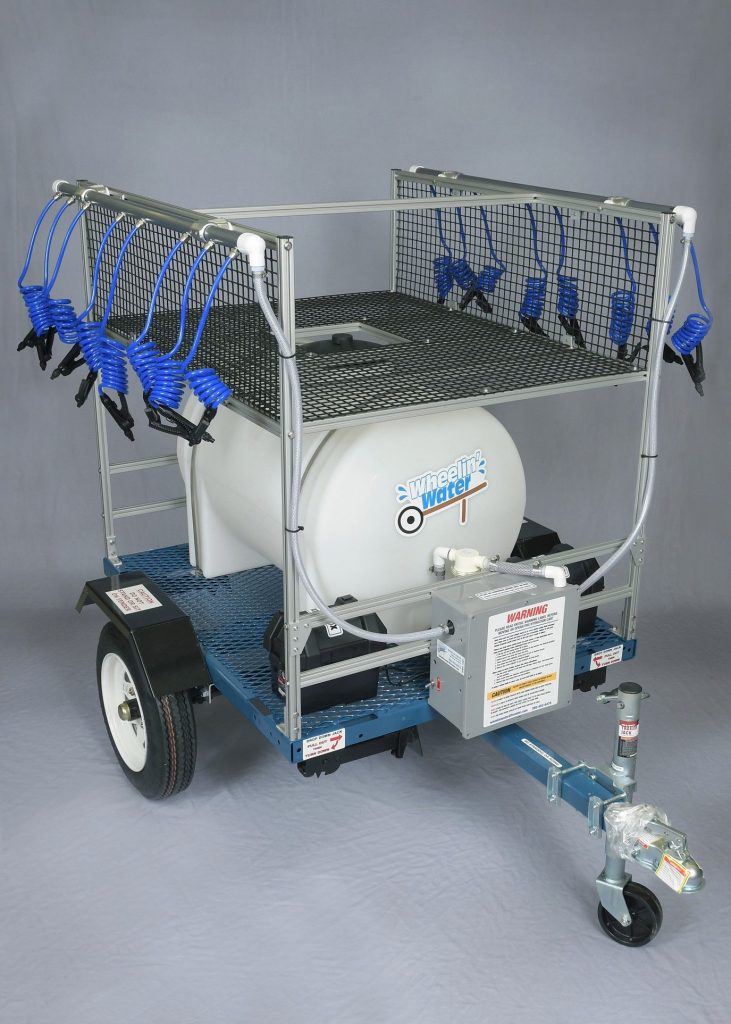
For larger programs, team water tankers may provide a substantial portable water supply. Smaller stations or water coolers and carts can supplement the main system or serve individual sideline areas.
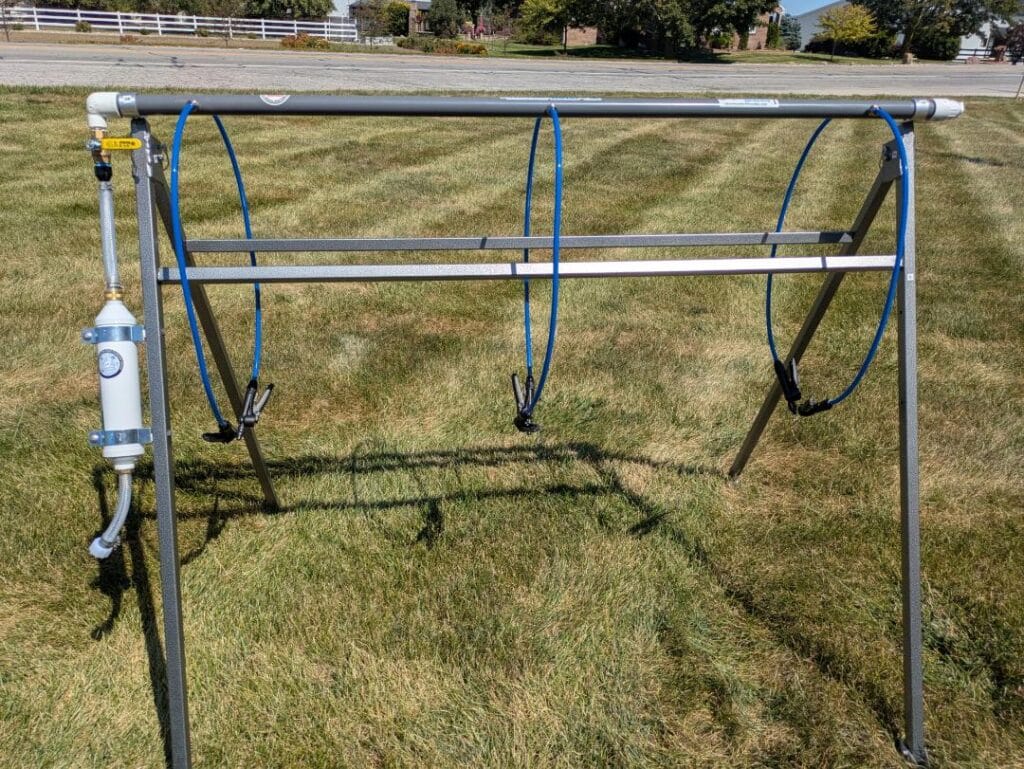
Multiple dispensing positions can help when several players need access during the same break. However, total tank capacity and simultaneous dispensing access are separate considerations.
Consider Transport and Setup Requirements
Before selecting or deploying a station, check its dimensions, filled weight, wheels, power requirements, and available access routes.
A unit that works well at the practice facility may be difficult to move through a stadium gate or load for an away game.
For a broader comparison of equipment types, see our football hydration equipment guide and football water tanker selection and capacity resource.
Our Hydration Equipment
-
50 Gallon Rechargeable Portable Water Wagon | 10 & 16 Hose Models – USA MADE!
$3,800.00 -
Best 65 Gallon Rechargeable Football Water Cow | Made In USA | New Low Price!
$5,090.00 -
Best Team Sports Hydration Station – Rechargeable 35 Gallon Tanker For 8 Players
Original price was: $2,790.00.$2,590.00Current price is: $2,590.00. -

Constant Chill Sports Cool Cart | Hydrates 6 Athletes
$1,290.00 -

Efficient 20 Player Team Practice Hydration Package | Our Hydration Station Combo
$3,390.00 -

Excellent Team Hydration Station Tree | Serves 8
$590.00 -
Our #1 Game Day Package | Team Misting Fans Cooling Station + Hydration Tanker
Original price was: $5,750.00.$5,390.00Current price is: $5,390.00. -
Our Best Football Water Station Serves 6 In Pads
Original price was: $1,190.00.$1,090.00Current price is: $1,090.00. -
Portable 35 Gallon Rechargeable Water Wagon | Made In USA!
$3,190.00




Pre-Game Hydration Station Setup
A consistent pregame routine helps equipment managers identify problems before they affect the team’s sideline operations.
Inspect and Prepare the Equipment
Before filling the station, check the tank, hoses, dispensing components, wheels, frame, and accessible connections for damage or wear.
Make sure the equipment has been cleaned and prepared according to manufacturer instructions. Any drinking-water contact components should be suitable for their intended use.
For rechargeable or powered systems, check the battery or electrical setup and follow the equipment’s operating instructions.
Fill and Test the System
Fill the station with drinking water from an appropriate source. Use clean, suitable filling equipment, and keep fill openings protected from contamination.
Test the dispensing system before players need it. Check that water reaches the intended outlets and that hoses, nozzles, and connections operate correctly.
If ice is used, handle it with appropriate clean equipment and follow the tank manufacturer’s instructions. Avoid assuming that every model accommodates the same filling or icing procedure.
Prepare Sideline Supplies
Set out the supplies appropriate to the equipment and the team’s procedures. These may include drinking cups, clean dispensing accessories, replacement components, and materials used by designated staff.
Keep supplies accessible without creating clutter around the station.
Finally, confirm who is responsible for water levels, equipment operation, and replenishment. A prepared station still needs someone assigned to maintain it.
Organizing Sideline Access
Even well-designed equipment can become inconvenient when placed in the wrong location.
Football sidelines accommodate players, coaches, athletic trainers, equipment managers, officials, and other authorized personnel. Hydration equipment must fit within that operating environment.
Keep the Station Accessible and Clear of Traffic
Place equipment within the permitted team area, where players can reach it during appropriate breaks without obstructing substitution activity, marked boundaries, or emergency access.
Don’t assume that one station should always be positioned beside a particular position group. The best arrangement depends on the available sideline space, the team’s routine, and venue requirements.
A large team may benefit from more than one drinking location, but additional stations should solve an identifiable access problem rather than simply add equipment.
For detailed layouts and player movement considerations, our separate guide to strategic sideline water station placement addresses that subject.
Managing Hydration Equipment During the Game
Once the game begins, the emphasis shifts from installation to reliable operation.
Monitor Supply and Dispensing Access
Assign an equipment manager, athletic training staff member, or other designated person to check the station throughout the event.
Their responsibilities may include monitoring remaining water, identifying dispensing problems, replenishing approved supplies, and coordinating refills.
The objective is to keep the equipment ready without requiring coaches to interrupt their primary responsibilities.
Plan Refills Around Game Operations
Know where additional drinking water will come from before kickoff.
If the station cannot be refilled conveniently during play, prepare an appropriate backup supply or secondary station. Consider the access route, staffing, and whether refilling can be completed without interfering with the game.
Do not automatically move a large, filled tanker during active sideline operations. Follow the equipment’s transport limitations and coordinate any repositioning with appropriate personnel.
Coordinate With the Team’s Existing Procedures
Hydration equipment supports the team’s established athletic training and heat-safety procedures; it does not replace them.
Coaches and equipment managers should coordinate with qualified athletic personnel regarding player needs, weather conditions, and scheduled breaks.
For broader staffing and operating considerations, see football hydration operations for coaches and equipment managers.
Adding Sideline Cooling Equipment
Hot-weather football programs may also provide designated cooling areas.
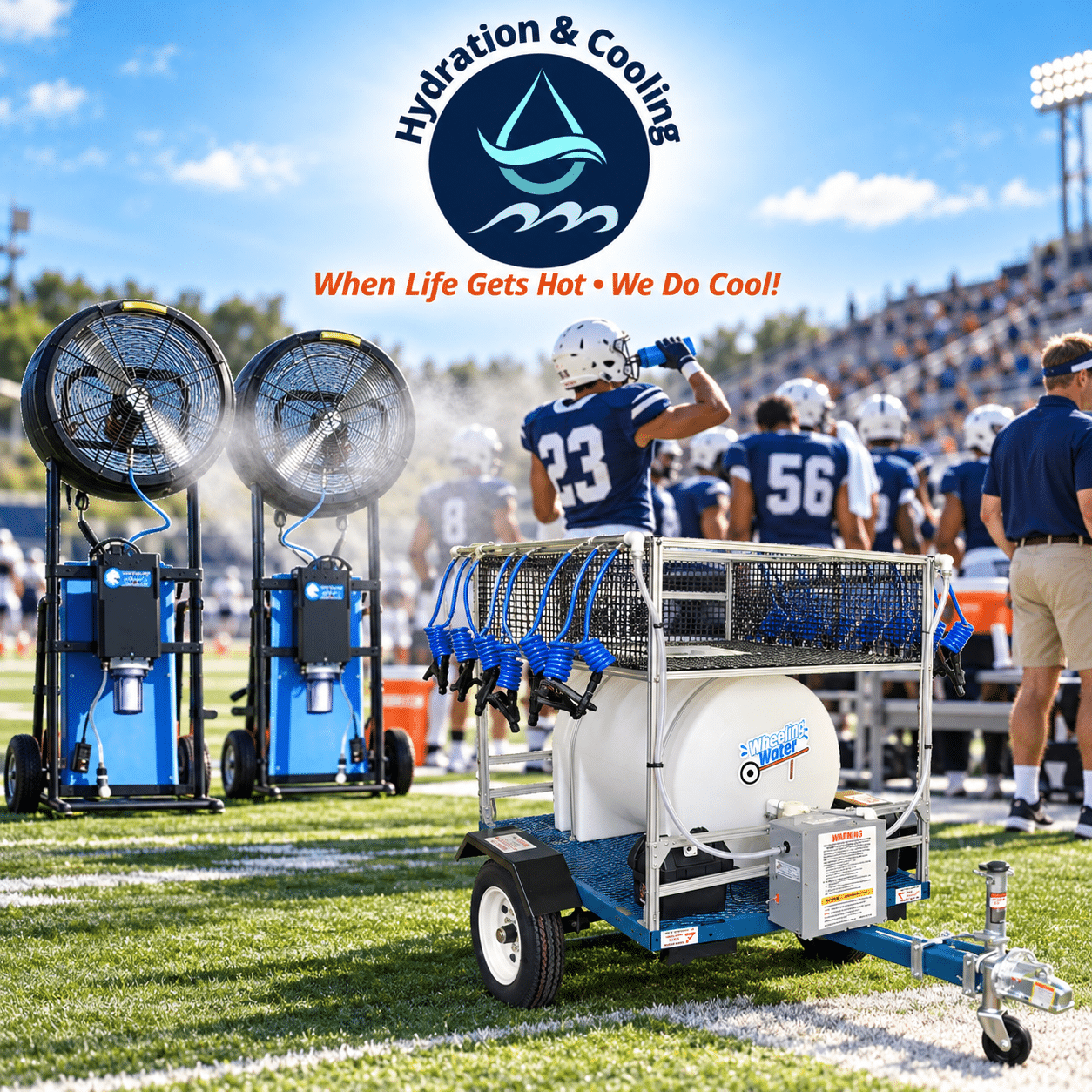
Portable outdoor misting fans can supplement a sideline equipment plan when weather conditions, space, and facility resources make them appropriate.
Before use, check power and water requirements, the manufacturer’s operating instructions, and the permitted location.
Keep misting equipment clear of congested walkways and electrical hazards. Consider where moisture will fall and whether it could affect other equipment or surfaces.
Misting fans are comfort and cooling resources—not medical treatment devices or substitutes for a comprehensive heat-safety program.
Our Misting Fans
-

24″ Misting Fans For Team | Powerful Outdoor Misting Cooling System
$2,590.00 -
Our #1 Game Day Package | Team Misting Fans Cooling Station + Hydration Tanker
Original price was: $5,750.00.$5,390.00Current price is: $5,390.00.
Postgame Cleaning and Storage
The setup process isn’t complete when the final whistle blows.
After the event, designated staff should check the equipment for damage, account for accessories, and follow the manufacturer’s instructions for draining, cleaning, sanitizing, and drying drinking-water components.
Inspect hoses, dispensing points, connections, and wheels before returning equipment to storage.
Rechargeable systems may require charging or battery maintenance. Follow the instructions for the particular model rather than applying a universal charging routine.
Record problems that need attention before the next practice or game. Our sports hydration equipment maintenance resource covers longer-term care considerations.
Game-Day Setup Checklist
Use this checklist before opening the sideline hydration station for team use.
- Equipment is clean, inspected, and suitable for operation.
- The station can be transported and positioned safely.
- Drinking water and any permitted ice are available.
- Hoses, outlets, connections, and powered components have been tested.
- The station is inside an approved area and clear of necessary access routes.
- Cups or other appropriate dispensing supplies are ready.
- Staff members understand monitoring and refill responsibilities.
- Backup water access has been considered.
- Cooling equipment, if used, has a suitable location and operating plan.
- Postgame cleaning and storage responsibilities are assigned.
Adapt the checklist to your equipment model, facility, and team procedures.
Conclusion
An effective football sideline hydration station starts with preparation, not a particular tank size or product package.
When equipment is inspected, filled, tested, positioned appropriately, and supported by assigned staff, football programs have a more organized way to provide drinking-water access throughout a game.
The strongest setup is one that fits the team’s existing operations and can be repeated reliably at each event.
Frequently Asked Questions
What is the best hydration station for a football sideline?
The best option depends on roster size, available space, refill access, and the number of players needing water during breaks. Large teams may benefit from portable water tankers, while smaller stations and cooler carts can serve as primary or supplementary drinking locations.
How many water stations does a football team need?
There is no universal number. Consider how players move through the team area, how many people need access at once, and whether a single station creates congestion. Multiple stations may be appropriate when the sideline layout supports them.
When should sideline hydration equipment be set up?
Set up and test equipment early enough to resolve problems before players require it. The exact timing depends on venue access, staffing, filling requirements, and the team’s pregame schedule.
Where should a football water cow be positioned?
Position the water cow in a permitted team area where it is accessible without obstructing field boundaries, personnel movement, or emergency routes. Follow venue requirements and the equipment’s stability and transport instructions.
Can a rolling cooler cart supplement a larger water tanker?
Yes. A rolling cooler cart can provide another drinking location or serve a smaller group while a larger tanker supplies the main sideline area. The arrangement should match the team’s actual access and refill needs.
Are misting fans necessary for football sideline hydration?
No. Misting fans are optional cooling resources that may be useful during warm-weather activities. They complement drinking-water access and other heat-safety measures but do not replace established athletic safety procedures.
Who should maintain hydration equipment during a football game?
The team should assign designated equipment or support personnel to monitor water levels, inspect dispensing access, manage supplies, and coordinate refills. Specific responsibilities should follow the team’s staffing and operational procedures.
Need Help Choosing the Right Hydration System?
Hydration & Cooling has more than 25 years of experience helping coaches, athletic directors, schools, teams, equipment managers, and organizations select hydration and cooling equipment appropriate for their needs and budgets.
Whether you’re planning a new football sideline setup or improving existing equipment, we’re happy to help you compare practical options.
Call 828-820-8600
Monday–Friday, 10 AM–5 PM EST
When Life Gets Hot • We Do Cool!