
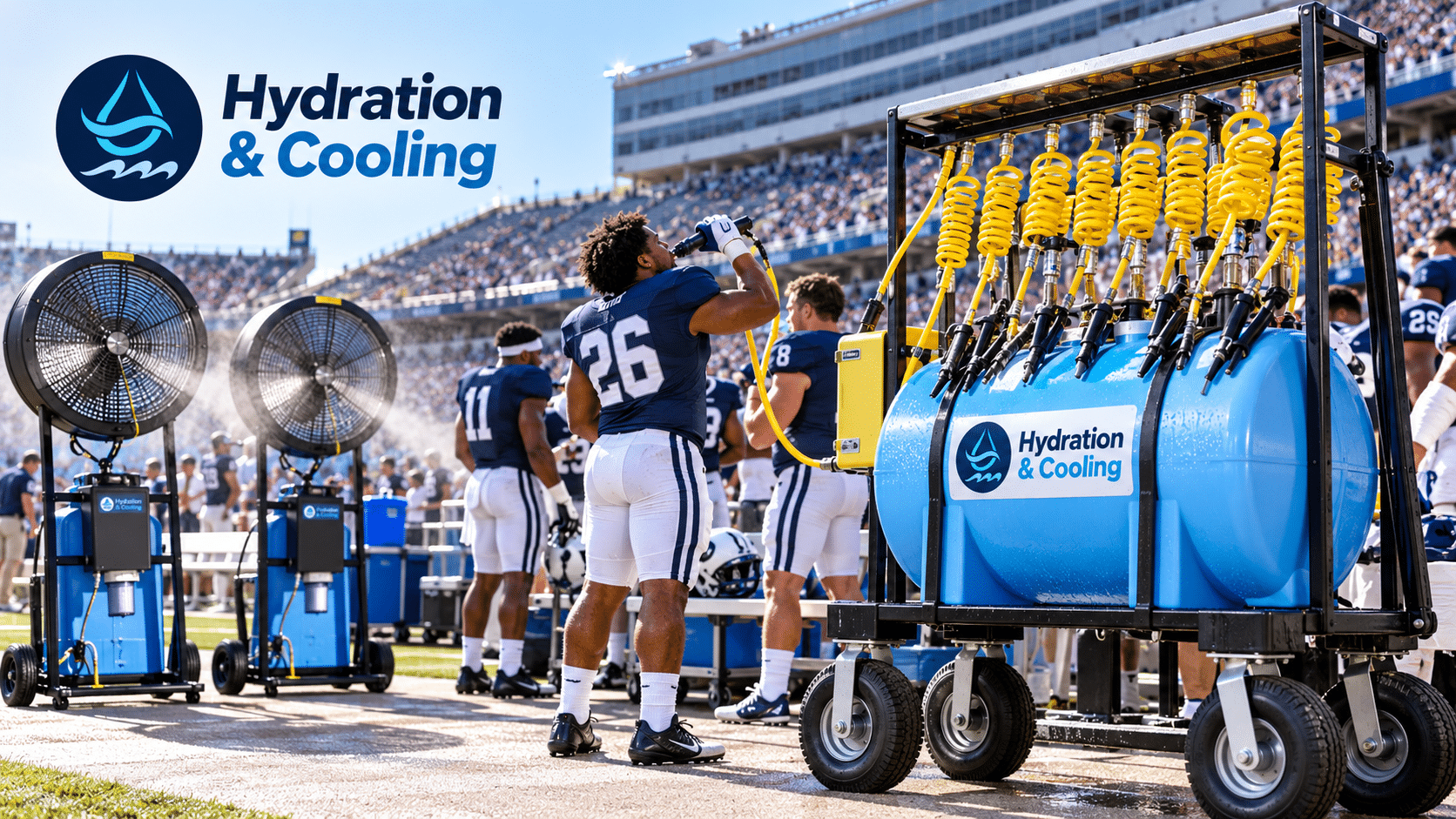
The Big Picture
College football hydration equipment must support more than a single team standing beside one practice field. Collegiate programs may operate across multiple outdoor fields, stadium sidelines, training facilities, preseason camps, and visiting-team venues.
For athletic directors, football operations staff, and equipment managers, choosing the right equipment means understanding how water will be transported, dispensed, replenished, cleaned, and stored throughout the season.
A high-capacity mobile water tanker may serve a central practice area, while smaller hydration stations can provide additional access at distant drill locations. Game-day arrangements introduce different considerations, including sideline space, staff movement, venue rules, and equipment readiness.
Hydration & Cooling helps programs evaluate practical equipment options based on those operating requirements—not unsupported claims about athletic performance or certification.
Key Insight: What Hydration Equipment Does a College Football Program Need?
A college football program may need mobile water tankers, commonly called water cows, portable water stations, dispensing equipment, and appropriate cooling resources. The right combination depends on roster size, practice-field layout, sideline restrictions, access to drinking water, transportation requirements, and refilling arrangements. Equipment should be chosen for reliable water access, practical maintenance, and the demands of the college’s facilities and schedule.
What Matters Most
- College football hydration equipment should be selected around actual practice and game-day operations.
- Mobile water tankers, or water cows, provide portable water capacity for team use.
- Smaller water stations may supplement larger systems across multiple fields.
- Capacity and dispensing access must be evaluated separately.
- Rechargeable equipment requires a power and charging plan.
- Cleaning, storage, transportation, and staffing are part of equipment selection.
- NCAA health and hydration guidance does not establish that a particular product is certified for college football use.
Table of Contents
Why Collegiate Football Programs Have Different Equipment Needs
College football programs often use different spaces for different activities.
An individual practice session might involve position groups moving between fields, conditioning work in another area, and support personnel preparing equipment for a later session.
On game day, the same equipment department may need to coordinate stadium access, transportation, storage, and sideline setup.
This makes equipment mobility and operations planning especially important.
The goal is not automatically to buy the largest available system. It is to choose a configuration that fits the program’s facilities, athletes, schedules, and available staff.
For a broader equipment overview, see our football hydration equipment guide.
Essential College Football Hydration Equipment
Mobile Water Tankers and Water Cows
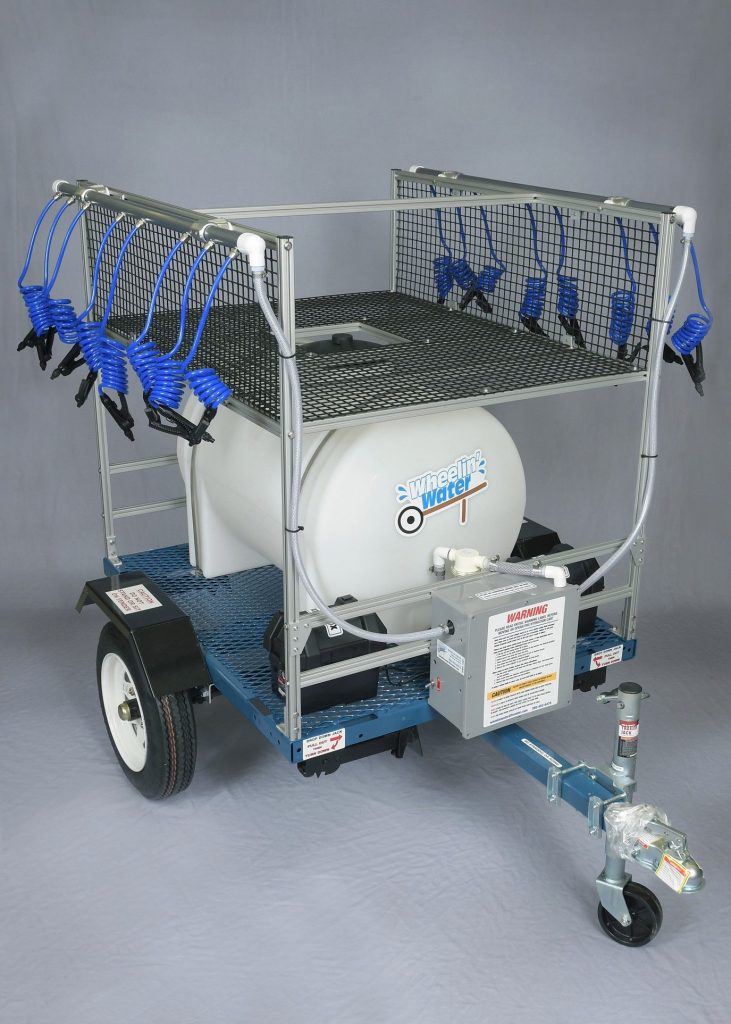
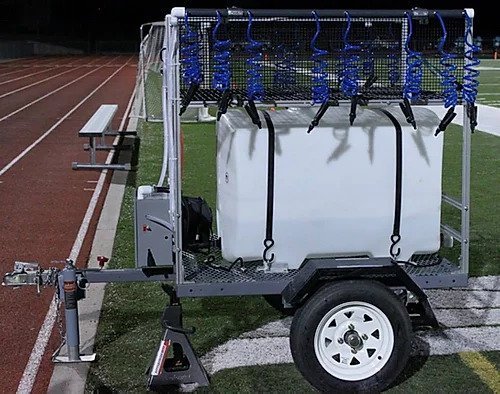
A water cow is a mobile hydration tanker used to transport and dispense drinking water for athletic teams.
These systems are useful when programs need portable water capacity near fields or other designated team areas.
Our sports hydration tankers and water cows provide a starting point for comparing available equipment configurations.
When considering a tanker, college programs should evaluate its water capacity, dispensing arrangement, movement over the facility’s surfaces, filling requirements, power needs, and storage dimensions.
A larger tank may reduce refill frequency, but it also requires appropriate transportation and a suitable location for operation.
Portable Water Stations and Cooler Carts
Not every location requires a large tanker.
Smaller hydration stations and mobile cooler carts may be suitable for individual position groups, smaller practice areas, designated sideline locations, or supplementary water access.
These units can also help distribute equipment across a campus when one central station would be inconvenient.
The choice between a larger tanker and several smaller stations depends on simultaneous demand, staffing, refill access, and the layout of the facility.
Dispensing Equipment
Tank capacity tells only part of the story.
Equipment managers should also consider how athletes will obtain water.
Depending on the model, a system may have multiple dispensing points, drinking hoses, or other approved arrangements.
Confirm actual product specifications before purchasing, including the number of available dispensing positions and any operating requirements.
Do not assume every model includes the same features.
Cooling Equipment
Outdoor football operations may also involve shaded team areas, portable misting fans, or other cooling equipment.
Cooling resources are separate from drinking-water supply. They should be positioned and operated according to manufacturer instructions, facility requirements, and the program’s heat-safety procedures.
Cooling equipment does not replace the judgment of athletic trainers or medical personnel.
Our Cooling and Hydration Equipment
-

24″ Misting Fans For Team | Powerful Outdoor Misting Cooling System
$2,590.00 -
50 Gallon Rechargeable Portable Water Wagon | 10 & 16 Hose Models – USA MADE!
$3,800.00 -
Best 65 Gallon Rechargeable Football Water Cow | Made In USA | New Low Price!
$5,090.00 -
Best Team Sports Hydration Station – Rechargeable 35 Gallon Tanker For 8 Players
Original price was: $2,790.00.$2,590.00Current price is: $2,590.00. -

Efficient 20 Player Team Practice Hydration Package | Our Hydration Station Combo
$3,390.00 -
Our #1 Game Day Package | Team Misting Fans Cooling Station + Hydration Tanker
Original price was: $5,750.00.$5,390.00Current price is: $5,390.00. -
Portable 35 Gallon Rechargeable Water Wagon | Made In USA!
$3,190.00 -
Super 100 Gallon Rechargeable Football Hydration Station | Made In USA & New Low Price!
$5,790.00



Planning Hydration Across Campus Facilities
Primary Practice Fields
A central practice field may benefit from a mobile water tanker positioned where athletes and authorized staff can reach it conveniently.
The station should not obstruct active drills, emergency access, coaching operations, or field transitions.
Before selecting a unit, verify where it can be filled, how it will reach the practice area, and where it will be stored afterward.
Our football practice hydration equipment guide explores the equipment considerations that matter during regular training sessions.
Multiple Practice Fields
Many college programs have several practice areas in use simultaneously.
A single large water station may be practical when fields are close together, but it may be less convenient when groups train in separate locations.
In those situations, supplementary water stations can reduce unnecessary trips between fields.
The program should evaluate whether portable equipment can be moved efficiently without interfering with ongoing activities.
See our football hydration system design for multiple fields resource for more detailed layout considerations.
Stadium Sidelines
A stadium sideline has different constraints from a practice field.
Equipment must fit within designated team areas and comply with the host venue’s operational rules.
Consider the movement of players, coaches, officials, athletic trainers, and other personnel before deciding where equipment will be positioned.
Our football sideline hydration station setup guide provides a dedicated game-day planning resource.
Choosing Capacity and Dispensing Access
Start With the Number of Athletes and Activity Locations
When evaluating equipment capacity, begin with practical questions.
How many athletes may need water access during the same period? Will the entire team use one location, or will position groups train separately? Is there a convenient water source for refilling?
Also consider the expected duration of each activity and the availability of staff to manage the system.
These factors are more useful than assuming a single tank size is right for every collegiate program.
Think About Refilling Before Selecting Tank Size
A large water tank is not necessarily the most convenient option if filling it requires difficult transportation or limited access to a suitable water source.
The purchasing decision should include where the tank will be filled, how refills will be managed, and whether the equipment can be moved safely when needed.
Our football water tanker selection and capacity guide provides additional buying considerations.
Evaluate Dispensing Capacity Separately
Two systems with similar water capacities may offer different dispensing arrangements.
Check the exact number of dispensing positions, ease of access, hose or nozzle configuration, and maintenance needs.
Also consider whether multiple athletes can approach and use the station comfortably in its intended location.
The most appropriate equipment is the system that fits both the water supply requirements and the way people will actually use it.
Game-Day Operations and Away Games
Prepare Equipment Before Arrival
Game-day preparation starts with inspection.
Check the station’s condition, applicable cleaning records, hoses, fittings, valves, wheels, and any powered components.
Confirm that staff understand where the equipment will be delivered, filled, positioned, and maintained.
The unit should be ready for service before athletes need it.
Plan for Visiting-Team Facilities
Away games may introduce additional limitations.
Programs should confirm the host venue’s rules for mobile equipment, filling locations, permitted sideline spaces, and available utilities.
Equipment that works conveniently at a home stadium may require a different arrangement at another facility.
A portable configuration may be useful where transportation or storage space is limited.
Assign Responsibilities
Specify who is responsible for moving the station, filling it, checking operation, coordinating refills, and returning equipment to storage.
The equipment manager, football operations team, athletic trainer, and other designated staff should understand their respective responsibilities.
For more operational detail, see our football hydration operations guide for coaches and equipment managers.
NCAA Guidance and Institutional Responsibilities
College football equipment planning should be consistent with the institution’s applicable athletic policies, conference requirements, venue procedures, and the responsibilities of its sports medicine personnel.
The NCAA Sport Science Institute publishes educational resources about student-athlete health, heat, and hydration.
Those resources are important, but they should not be confused with a claim that a particular commercially available hydration tanker, cooler cart, or water station is automatically NCAA-certified.
Colleges should consult the applicable NCAA materials and their own athletics compliance and sports medicine personnel when evaluating institutional requirements.
Relevant background information is available from the NCAA Sport Science Institute’s nutrition, hydration, and heat resources.
Hydration & Cooling’s role is to help institutions evaluate practical hydration and cooling equipment options. Medical procedures and athletic policy decisions belong with the appropriate college personnel.
Seasonal Weather and Cooling Considerations
Hot-Weather Practices
Early-season training can involve substantial heat exposure.
Programs should coordinate equipment availability with their existing heat-safety policies and the direction of authorized medical personnel.
Water stations should be accessible in approved locations, with sufficient capacity and a workable refill plan.
Shade and appropriately operated misting equipment may be included in designated areas where the facility permits them.
Late-Season Cold Weather
Cold temperatures can affect water equipment and dispensing components.
Equipment managers should follow manufacturer instructions for freezing conditions, draining, and storage.
Do not assume that every model has insulation, freeze protection, or other temperature-control features.
Year-Round Equipment Use
A college may use the same hydration equipment during football season and for other outdoor programs.
Shared use can be practical when equipment is compatible with each sport’s needs and when scheduling, cleaning, storage, and transport responsibilities are clearly assigned.
College Football Equipment Buying Checklist
Before purchasing or replacing a hydration system, college athletics personnel should confirm:
- Athlete demand: How many people may need access at one time?
- Facility coverage: Will the equipment support one field or several locations?
- Water capacity: Is the tank size appropriate for the program’s refill arrangements?
- Dispensing access: How many dispensing points are included in the selected model?
- Mobility: Can staff safely transport and position the equipment?
- Power: Does the system require charging, external electricity, or neither?
- Cleaning: What procedures and replacement components does the manufacturer specify?
- Storage: Does the department have an appropriate storage location?
- Venue compatibility: Can the system be used in the designated practice and stadium areas?
- Purchase details: What components, delivery arrangements, support, and operating requirements are included?
Equipment should be compared by its complete configuration and intended use, not simply by advertised tank capacity.
Conclusion
College football hydration equipment should support the realities of an athletic program’s facilities and schedule.
A mobile water tanker may be appropriate for a large central practice area, while portable stations can help serve separate fields and designated sideline locations.
The best arrangement depends on roster size, simultaneous demand, equipment mobility, refilling, staff responsibilities, and maintenance requirements.
By evaluating these factors before purchasing, colleges can choose equipment suited to their operations without relying on exaggerated product claims or assumptions about NCAA certification.
Frequently Asked Questions
What hydration equipment does a college football program need?
Depending on its facilities and operations, a college football program may use mobile water tankers, water cows, portable hydration stations, cooler carts, and appropriate cooling equipment. The right combination depends on athlete demand, available water sources, mobility, and staffing.
How large should a college football water cow be?
There is no single tank capacity suitable for every college program. Equipment managers should consider the number of athletes, simultaneous dispensing needs, activity duration, access to refills, and transportation requirements when comparing available models.
Does college football hydration equipment need NCAA certification?
Colleges should follow applicable athletic requirements and institutional procedures, but a general claim that a particular water tanker or hydration station is NCAA-certified should not be made without documentation. NCAA heat and hydration resources are not product certification.
How should colleges provide water access across multiple practice fields?
Programs can evaluate a central high-capacity system, supplementary portable stations, or a combination of both. The arrangement should reflect field distances, player movement, available water sources, and staff responsibilities.
Are rechargeable water tankers suitable for college football?
Rechargeable tankers may be suitable when their capacity, dispensing configuration, battery requirements, and mobility match the program’s needs. Colleges should confirm the specifications and establish a charging and maintenance routine before purchasing.
How often should college football hydration equipment be cleaned?
Follow the specific equipment manufacturer’s cleaning and sanitizing instructions, including after-use procedures and maintenance requirements. Staff should also inspect tanks, hoses, nozzles, seals, and dispensing components before returning equipment to service.
Can college football hydration equipment be shared with other sports?
Yes, when the equipment is suitable for the other programs and scheduling permits. Shared use requires clear responsibilities for cleaning, transport, setup, maintenance, and storage.
Need Help Choosing the Right Hydration System?
Hydration & Cooling brings more than 25 years of experience helping schools, athletic departments, coaches, and equipment managers evaluate hydration and cooling equipment.
Whether your college needs a mobile water cow, portable sideline stations, or a combination of equipment for several facilities, we can help you compare practical options.
Call Hydration & Cooling: 828-820-8600
Business hours: Monday–Friday, 10 AM–5 PM EST
Tell us about your program, the fields you serve, and the equipment you currently use. We’ll help you identify options worth considering.
When Life Gets Hot • We Do Cool!