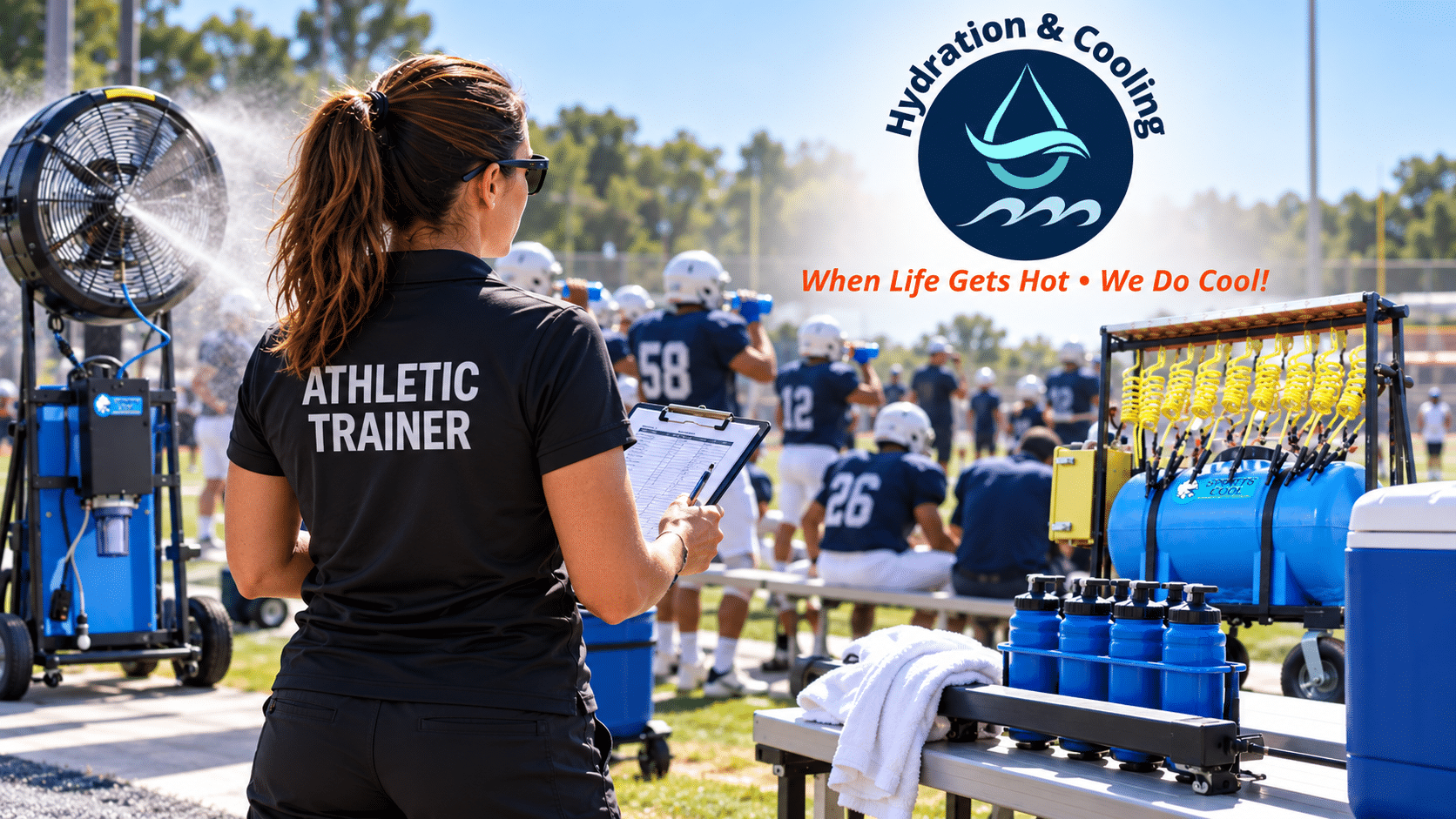
Athletic trainers are often responsible for coordinating the practical side of hot-weather preparation across practices, competitions, tournaments, and multiple athletic facilities. That means more than having water available. It means understanding environmental conditions, preparing hydration and cooling equipment, establishing equipment locations, coordinating staff responsibilities, and making sure the program’s emergency action plan can be supported by the resources available on site.
A well-organized heat safety program connects hydration access, cooling resources, facility logistics, environmental monitoring, staff communication, equipment maintenance, and emergency preparedness.
This playbook focuses on that operational side of heat safety and the equipment athletic trainers and athletic departments can use to support their established health and safety procedures.
What Should an Athletic Trainer Include in a Heat Safety Plan?
A comprehensive athletic heat safety plan should address environmental conditions, athlete and sport considerations, hydration access, cooling resources, equipment placement, staff responsibilities, emergency-action-plan coordination, equipment maintenance, and preparation for practices, games, tournaments, and travel. The medical assessment and treatment portions of the plan should remain under the direction of the program’s qualified healthcare professionals and established emergency procedures.
TL;DR
For athletic trainers, effective hot-weather preparation involves more than selecting hydration equipment.
A practical plan should consider:
- Environmental conditions and monitoring
- Hot-weather preparation procedures established by the athletic program
- Hydration access before, during, and after activity
- Team hydration stations and mobile water systems
- Cooling equipment and designated recovery areas
- Equipment placement across fields and facilities
- Communication between athletic trainers, coaches, equipment staff, and administrators
- Emergency action plan coordination
- Equipment inspection and maintenance
- Tournament and multi-field logistics
- Seasonal preparation and preseason equipment checks
The goal is to make the program’s hydration and cooling resources available, organized, maintained, and ready to support the broader heat safety plan.
Table of Contents
Understanding the Athletic Trainer’s Role in Heat Safety
Athletic trainers operate at the intersection of healthcare, athletics, facilities, coaches, athletes, and athletic administration.
During hot-weather periods, that makes coordination particularly important.
The athletic trainer may need to consider:
- Where athletes will practice or compete
- How many athletes need access to water
- Where hydration stations will be positioned
- How cooling equipment will be transported
- Where designated recovery or cooling areas will be located
- How staff will communicate during practices and games
- Whether equipment is accessible from multiple fields
- How equipment will be maintained between uses
- How the athletic facility supports the established emergency action plan
The original purpose of a heat safety playbook is therefore broader than a list of products. It is a system for organizing resources and responsibilities before hot-weather conditions create operational challenges.
Different Sports Create Different Equipment Challenges
Football, soccer, lacrosse, track and field, baseball, softball, and other outdoor sports have different facility layouts and equipment requirements.
Football may require hydration and cooling resources along a large sideline and practice field.
Soccer and lacrosse may involve large fields where equipment must be positioned without interfering with play.
Track and field programs may have athletes spread across running, jumping, throwing, warm-up, and staging areas.
Tournament environments create another challenge because athletes and equipment may move between fields throughout the day.
A heat safety plan should account for those differences rather than assuming that one equipment configuration works everywhere.
Environmental Conditions and Heat Safety Planning
Hot-weather preparation begins before athletes arrive.
Athletic programs commonly monitor environmental conditions as part of their established heat-management procedures. Athletic trainers should use the environmental monitoring standards, sport-specific policies, governing-body recommendations, and institutional protocols applicable to their program.
For Hydration & Cooling, the important equipment question is:
What changes when environmental conditions require additional hydration or cooling resources?
That can affect:
- Hydration station placement
- Number of available water-access points
- Cooling equipment requirements
- Staff positioning
- Practice-field logistics
- Recovery-area setup
- Equipment transportation
- Practice or competition scheduling
- Emergency equipment accessibility
Equipment and Protective Gear
Sport-specific equipment can also affect hot-weather planning.
Football players, for example, may practice in helmets and pads while other athletes use substantially less protective equipment. The athletic trainer’s planning process should therefore account for the sport, equipment worn, facility, activity schedule, and environmental conditions.
The equipment plan should support the program’s broader safety procedures rather than operate separately from them.
Building an Athletic Hydration System
Hydration equipment is one of the most visible parts of a hot-weather athletic program.
The objective is not simply to have water somewhere on campus. Water needs to be accessible where athletes and staff actually need it.
Depending on the program, that may involve:
- Team hydration stations
- Portable water tankers
- Rolling water carts
- Water cooler carts
- Individual athlete bottles
- Multiple hydration stations across a practice facility
- Mobile equipment for tournament environments
Team Hydration Stations
Team hydration stations allow multiple athletes to access water from a centralized system.
They can be particularly useful for teams operating on a practice field or sideline where many athletes need access during scheduled breaks.
Mobile Hydration Equipment
Mobility becomes important when athletic programs use multiple practice locations.
A mobile hydration system can be moved between:
- Practice fields
- Game fields
- Warm-up areas
- Tournament sites
- Training areas
- Indoor and outdoor facilities
The equipment selected should match the number of athletes, distance between locations, available water supply, transportation requirements, and storage space.
Hydration Station Placement
Placement should be determined before practice begins.
Consider:
- Where athletes naturally gather
- Where coaches schedule hydration breaks
- How far athletes must travel to access water
- Whether equipment creates sideline congestion
- Whether staff can replenish the system efficiently
- Whether equipment can be moved if practice conditions change
Our resources on sports hydration equipment and team water tankers can help athletic programs evaluate different equipment configurations.
Cooling Technologies for Athletic Programs
Hydration is only one component of a broader hot-weather equipment plan.
Athletic programs may also use cooling resources such as:
- Portable misting fans
- Designated shaded areas
- Cooling stations
- Ice-based resources
- Portable cooling equipment
- Indoor recovery areas where available
The appropriate combination depends on the sport, facility, climate, available infrastructure, and established program procedures.
Portable Misting Fans
Portable misting fans can provide a mobile cooling resource for outdoor athletic environments.
They can be positioned near:
- Team benches
- Sidelines
- Practice areas
- Recovery areas
- Tournament staging areas
- Athlete gathering areas
Hydration & Cooling’s outdoor misting fans are designed for outdoor applications where portable cooling equipment is useful.
The important planning question is not simply whether a program owns a misting fan. It is where the equipment will be located, who will operate it, how it will be supplied, and how it will be maintained.
Creating Cooling Zones
A designated cooling area can combine several resources in one organized location.
Depending on the facility, a cooling zone may include:
- Hydration equipment
- Portable misting fans
- Shade
- Seating or recovery space
- Ice and other program-designated cooling resources
- Access for athletic trainers and other authorized personnel
This creates a defined location rather than scattering cooling resources throughout the facility.
Creating Designated Hydration and Cooling Areas
A strong equipment plan considers the movement of athletes and staff.
A hydration station positioned where athletes rarely go may technically provide water but still create an inefficient setup.
Likewise, cooling equipment placed too far from the team area may be difficult to deploy when needed.
Map the Facility
Before the season or a major competition, identify:
- Team areas
- Practice fields
- Competition fields
- Warm-up areas
- Hydration locations
- Cooling locations
- Equipment storage
- Water connections
- Electrical connections
- Vehicle or cart access
- Emergency access routes
For facilities with several fields, create a simple equipment map showing where mobile hydration and cooling equipment should be staged.
Consider Tournament Operations
Tournament days can require a different approach from ordinary practices.
Teams may move between fields. Schedules may change. Equipment may need to be transported quickly. Hydration and cooling resources should therefore be assigned to locations rather than simply assigned to a single team.
This is where mobile equipment can become particularly useful.
Our Hydration and Cooling Equipment
-

24″ Misting Fans For Team | Powerful Outdoor Misting Cooling System
$2,590.00 -

Constant Chill Sports Cool Cart | Hydrates 6 Athletes
$1,290.00 -

Efficient 20 Player Team Practice Hydration Package | Our Hydration Station Combo
$3,390.00 -

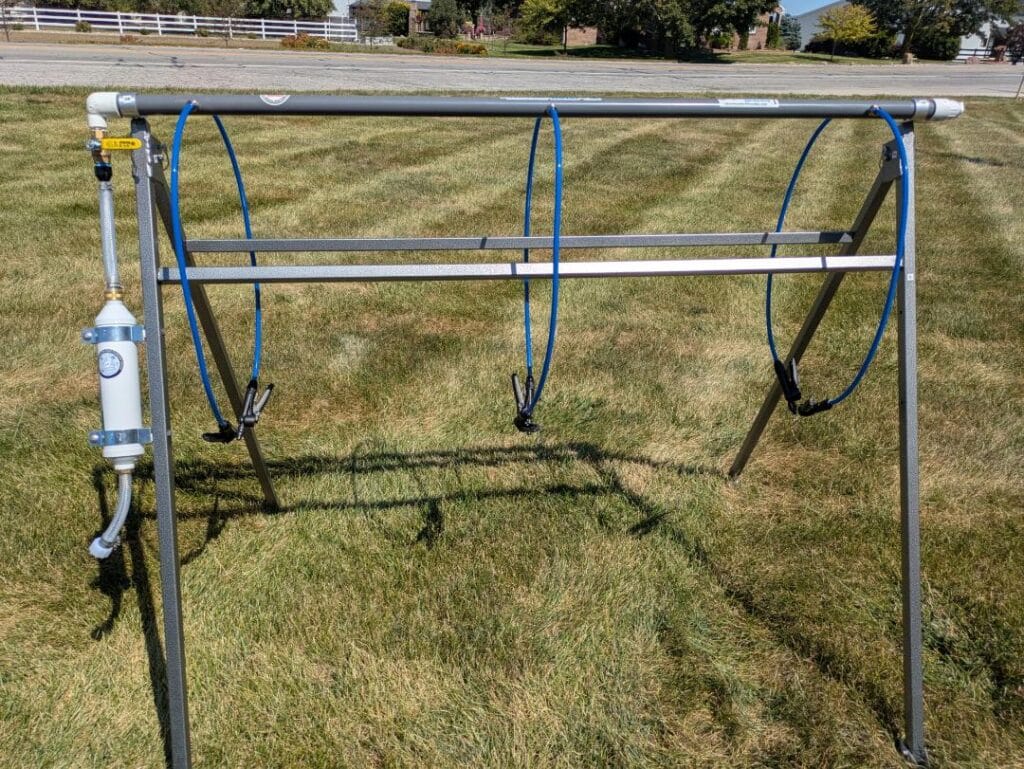
Excellent Team Hydration Station Tree | Serves 8
$590.00 -
Our #1 Game Day Package | Team Misting Fans Cooling Station + Hydration Tanker
Original price was: $5,750.00.$5,390.00Current price is: $5,390.00. -
Our Best Football Water Station Serves 6 In Pads
Original price was: $1,190.00.$1,090.00Current price is: $1,090.00. -

Rolling Water Cooler Cart & Optional 5 + 10 Gallon Igloo Cooler
Price range: $490.00 through $595.00 -
Small Hydration Carts | USA-Made 10 & 20 Gallon Models | New Low Price!
Price range: $1,890.00 through $2,180.00 -

Sports Cool Rolling Powered Team Drinker | Best Water Station Serves 6
$1,990.00


Emergency Action Plan and Equipment Coordination
An athletic trainer’s emergency action plan should define medical responsibilities and response procedures appropriate to the facility and program.
Hydration & Cooling’s role is the equipment side of that preparation.
Equipment planning can support the EAP by establishing:
- Where cooling equipment is located
- How equipment is accessed
- Which staff members know how equipment operates
- How equipment reaches different fields
- Where hydration resources are positioned
- How staff communicate equipment needs
- How equipment is inspected
- How equipment is maintained between practices and competitions
Equipment Location Should Be Known in Advance
In a multi-field athletic complex, staff should not have to search for essential equipment.
Create an equipment map showing the location of:
- Hydration stations
- Mobile water systems
- Misting fans
- Designated cooling resources
- First-aid and emergency resources as determined by the program
- Water and power access
The specific medical response should remain within the program’s established emergency procedures and the direction of qualified healthcare personnel.
Practice the Logistics
Emergency preparedness is not only about writing an emergency action plan.
Staff should also know:
- Who retrieves equipment
- Where equipment is stored
- How equipment is transported
- Which routes provide facility access
- How equipment is operated
- Who is responsible for checking it afterward
Those logistical details can be incorporated into preseason training and facility drills.
Heat Preparation and Equipment Planning
Preparing athletes and teams for hot-weather practices is an important part of athletic program planning, particularly when teams transition into hotter conditions or travel from a cooler environment into substantially different conditions.
The athletic trainer and appropriate healthcare personnel should establish the program’s procedures for preparing athletes for hot-weather activity.
From an equipment perspective, the important question is:
Does the equipment plan change as the training environment changes?
For example:
- Are additional hydration stations required?
- Does equipment need to be moved closer to athletes?
- Are additional cooling resources necessary?
- Will practice move between fields?
- Will athletes spend more time outdoors?
- Does the team need mobile equipment during preseason?
- Does tournament travel require a portable setup?
Football and Other Equipment-Intensive Sports
Sports requiring substantial protective equipment deserve particular attention during hot-weather planning.
Football is an obvious example, but the same planning principle applies to any sport where uniforms, protective equipment, or facility conditions affect the practical demands of a hot-weather training session.
The equipment plan should be coordinated with the program’s established hot-weather preparation and activity procedures.
Preparing for Practices, Games, and Tournaments
A heat safety playbook should work on an ordinary practice day as well as during a major competition.
Before Practice
Confirm:
- Hydration equipment is filled and operational
- Cooling equipment is in the correct location
- Water and power connections are available where required
- Equipment has been inspected
- Staff know where equipment is located
- Designated hydration and cooling areas are clear
- Communication procedures are understood
During Practice
Monitor the operation of the equipment.
Look for:
- Empty or low water supplies
- Equipment that has been moved
- Blocked access
- Equipment malfunctions
- Changes in practice location
- Increased demand for hydration or cooling resources
Before Games
Game-day preparation should account for:
- Sideline layout
- Team areas
- Athlete access
- Officials and staff areas
- Equipment placement
- Replenishment
- Cooling resources
- Facility access
- Emergency routes
Our football hydration equipment and football sideline cooling solutions resources provide additional planning information for football programs.
Tournament and Multi-Field Operations
For tournaments, consider creating a mobile equipment plan.
Identify:
- Which teams need equipment
- Which fields require hydration access
- Where cooling resources will be staged
- Who transports equipment
- How water will be replenished
- What happens when schedules change
The more mobile the operation, the more important equipment organization becomes.
Equipment Maintenance and Seasonal Readiness
Equipment readiness is an ongoing responsibility.
Hydration and cooling systems should be inspected, cleaned, stored, and maintained according to manufacturer instructions.
Before the Season
Review:
- Hoses
- Connections
- Pumps
- Tanks
- Wheels and frames
- Drinking components
- Misting nozzles
- Electrical components
- Water connections
- Storage areas
During the Season
Inspect equipment regularly for:
- Leaks
- Clogged components
- Damaged hoses
- Pump problems
- Missing parts
- General wear
- Cleaning requirements
After Use
Equipment should be cleaned and stored appropriately so it is ready for the next practice or competition.
For athletic departments managing equipment across several sports, maintaining a simple equipment inspection schedule can make seasonal preparation much easier.
Athletic Trainer Heat Safety Planning Checklist
Use this checklist when preparing a facility or program for hot-weather activity:
Environmental Planning
- Environmental monitoring procedures established
- Sport-specific requirements reviewed
- Practice and competition locations identified
- Hot-weather preparation procedures established by qualified personnel
Hydration
- Hydration equipment selected
- Stations positioned appropriately
- Water supply confirmed
- Replenishment procedures established
- Mobile equipment available where needed
Cooling
- Cooling resources identified
- Misting fans inspected
- Designated cooling areas established
- Shade or indoor cooling areas identified where available
- Equipment locations communicated to staff
Emergency Preparedness
- Emergency action plan reviewed
- Equipment locations documented
- Staff responsibilities established
- Communication procedures reviewed
- Facility access routes identified
- Appropriate drills or training completed
Maintenance
- Equipment inspected
- Hoses and connections checked
- Pumps and electrical components checked
- Misting nozzles checked
- Equipment cleaned
- Storage locations organized
Frequently Asked Questions
What equipment should athletic trainers have available for hot-weather practices?
Equipment needs vary by sport and facility, but athletic programs may use team hydration stations, mobile water systems, rolling water carts, portable misting fans, designated cooling resources, and other equipment appropriate to their established hot-weather plan.
Where should hydration and cooling equipment be positioned?
Equipment should be positioned where athletes and staff can access it efficiently without interfering with athletic activity. Team areas, sidelines, practice areas, warm-up areas, and designated recovery zones may all be appropriate depending on the facility.
Should hydration and cooling equipment be included in the emergency action plan?
The emergency action plan should establish the medical and emergency procedures appropriate to the program. From an equipment standpoint, it is useful to document where hydration and cooling resources are located, who can access them, how they operate, and how they can be moved when necessary.
How should athletic trainers prepare equipment for multiple fields?
Create a facility equipment map and identify which hydration and cooling resources belong at each location. Mobile systems can be particularly useful when teams rotate between practice fields, competition areas, and tournament locations.
What role does hot-weather preparation play in equipment planning?
The program’s qualified healthcare personnel should establish hot-weather preparation procedures. Equipment planning should then support those procedures by ensuring appropriate hydration access, cooling resources, mobility, and staff readiness as training conditions change.
How often should athletic hydration and cooling equipment be maintained?
Equipment should be inspected and maintained according to the manufacturer’s instructions and the program’s operating schedule. Regular preseason inspections, routine checks during the season, and proper cleaning and storage after use help keep equipment ready.
Conclusion
A heat safety playbook for athletic trainers should be more than a collection of medical protocols or a list of equipment.
It should connect the people, facilities, equipment, communication procedures, and operational responsibilities that make a hot-weather plan workable.
That means understanding environmental conditions, preparing for hot-weather activity, providing convenient hydration access, establishing cooling areas, positioning equipment strategically, coordinating with the emergency action plan, training staff, and maintaining equipment throughout the season.
Hydration & Cooling provides equipment that can support those operational requirements, including team hydration systems, mobile water equipment, water cooler carts, and portable outdoor cooling solutions.
The right equipment configuration depends on the sport, facility, athlete population, schedule, mobility requirements, available water and power, and budget.
Need Help Planning Your Athletic Hydration and Cooling Equipment?
Hydration & Cooling has more than 25 years of experience helping athletic trainers, coaches, athletic directors, schools, teams, equipment managers, and organizations select hydration and cooling equipment appropriate to their needs and budget.
Monday–Friday, 10 AM–5 PM EST